

Fragrant Nawabi Tarkari Biryani: A Vegetarian Mughal Feast

1 hour 40 minutes
837 reads

About Fragrant Nawabi Tarkari Biryani: A Vegetarian Mughal Feast
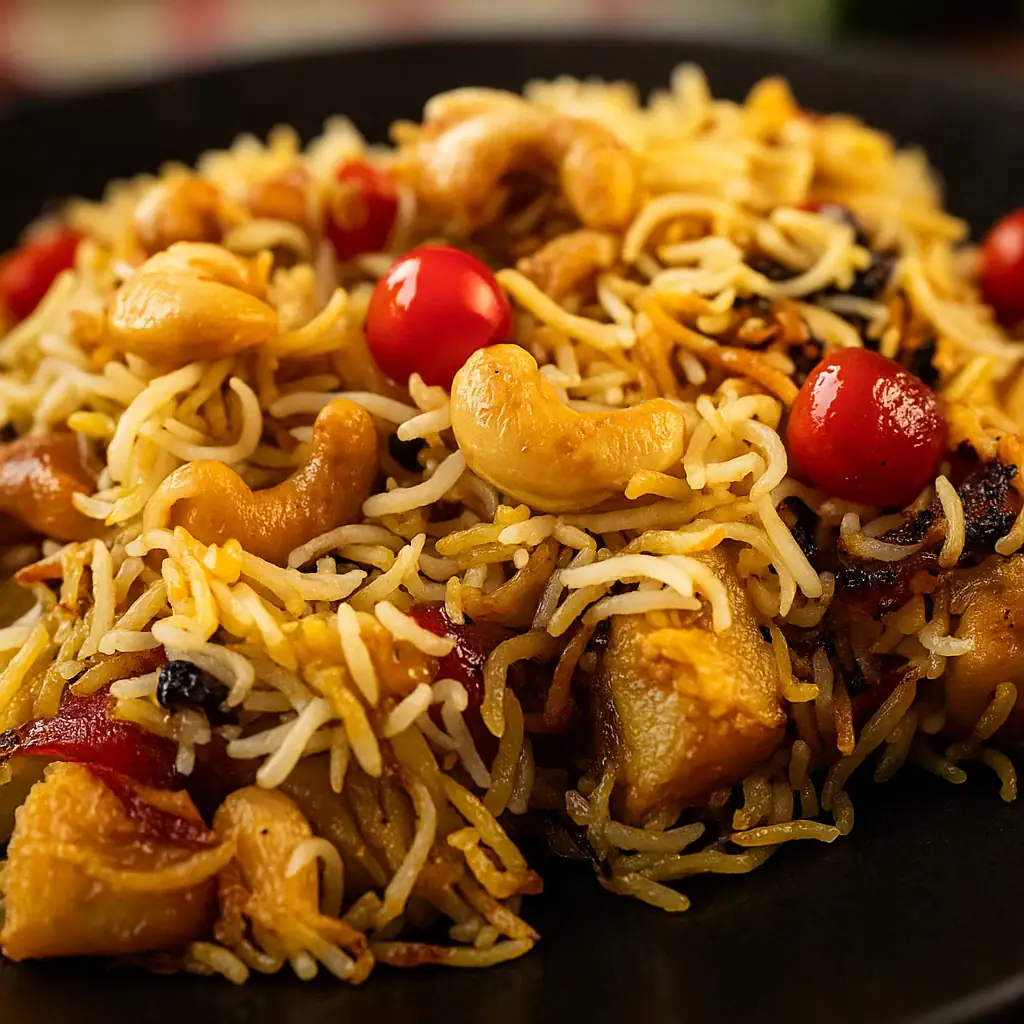
Embark on a culinary adventure with this aromatic Nawabi Tarkari Biryani, a vegetarian celebration of Mughal India's rich heritage. Imagine fragrant basmati rice mingling with tender potatoes and carrots, infused with a symphony of cardamom, cloves, cinnamon, and saffron.The traditional dum cooking method seals in these exquisite spices, creating a truly unforgettable biryani experience. Whether it's a special occasion or a comforting weeknight meal, this recipe offers a delicious journey through Indian culinary history.
Stop Thinking About What to Cook Every Day
Healthy Eating, Kids Tiffin, PCOS and Weight loss meals, all planned out for you. Just follow the plan and cook. From ₹299.
Recipe Time & More
Prep1 hour 10 minutes
Cook30 minutes
Total1 hour 40 minutes
Ingredients
For the Biryani Rice
- 2 cup Basmati Rice for biryani
For the Aromatic Spices
For the Vegetable Base
- 2 medium Potatoes peeled and cubed,
- 1 Carrots peeled and cubed
- 2 medium Onions sliced
- 2 Chiles green, or more, to taste
- 1 Tbsp Ginger-Garlic Paste
- 1 tsp Turmeric Powder
- 1 tsp Chili Powder red
- 1 cup Yogurt thick
For the Garnish and Dum Cooking
- 2 Tbsp Cashews
- 2 Tbsp Almonds blanched and slivered
- 2 Tbsp Raisins
- 1 Tbsp Cherries dried
- 3 Tbsp Clarified Butter plus 2 tsp for frying nuts
- 1 tsp Saffron Strands soaked in 3 tbsp warm milk
- 3 Tbsp Mint Leaves chopped finely, fresh
- 3 Tbsp Coriander chopped finely, fresh
- 1-2 tsp Rose Water
- ½ cup Onions thinly sliced and fried until golden brown and crisp
- Salt to taste
- 1 Batch for sealing the pot, of chapati dough (indian bread dough)
Instructions
Preparing the Rice
- Thoroughly rinse the basmati rice in a fine-mesh sieve until the water runs clear. This removes excess starch and helps achieve fluffy, separated grains.
- In a large pot, bring 2 liters of water to a rolling boil. Add the green cardamoms, black cardamoms, cloves, cinnamon sticks, and bay leaves. These whole spices infuse the water with their aromatic flavors.
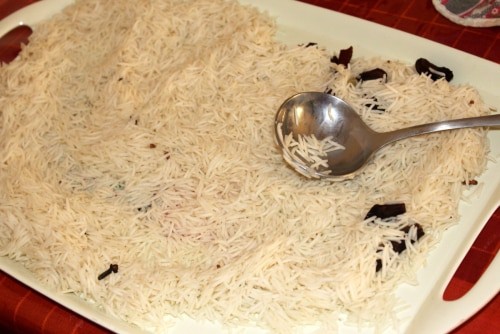
- Add the rinsed rice to the boiling water and cook for 3-4 minutes, or until about 70% cooked. The rice should be slightly soft but still have a bite to it. This parboiling technique ensures that the rice finishes cooking evenly in the biryani.

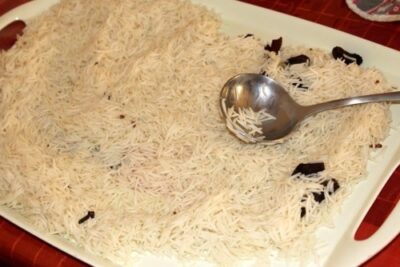
- Drain the rice in the sieve and spread it out on a large tray or a clean kitchen towel to air dry slightly. This prevents the rice from becoming mushy in the biryani.
Preparing the Garnish
- In a small bowl, combine ½ cup of plain yogurt with the saffron-infused milk. This saffron-yogurt mixture adds a beautiful golden hue and a delicate flavor to the biryani. Also, chop the fresh mint and cilantro.
Making the Masala
- Heat 2 teaspoons of ghee in a small pan over medium heat. Fry the cashews, blanched almonds, and raisins until fragrant and lightly golden. Set aside.
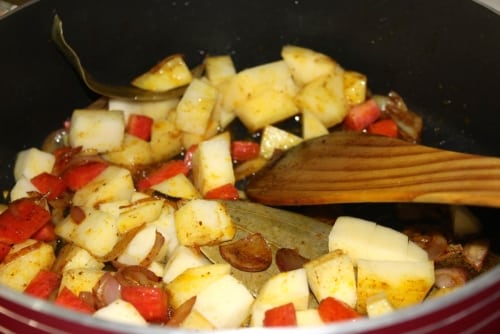
- In a large pot or Dutch oven with a tight-fitting lid (ideally a biryani handi), heat the remaining 3 tablespoons of ghee over medium heat. Add the remaining whole spices (green cardamoms, black cardamoms, cloves, cinnamon sticks, and bay leaves) and sauté until they release their aroma.
- Add the sliced onions to the pot and sauté until translucent and softened. Then, add the green chiles and ginger-garlic paste. Continue to sauté until the paste is fragrant and the onions turn light brown.
- Stir in the turmeric powder and red chili powder, cooking for a minute until fragrant. Add the remaining ½ cup of plain yogurt and about ⅔ cup of water. This creates a flavorful base for the biryani.
- Bring the mixture to a simmer, then cover the pot and cook for 5-7 minutes, or until the water has mostly evaporated and the flavors have melded together. Remove from heat.

Assembling the Biryani
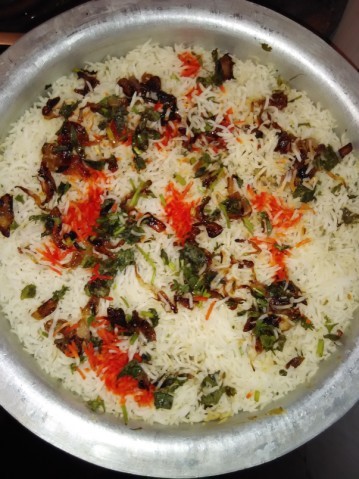
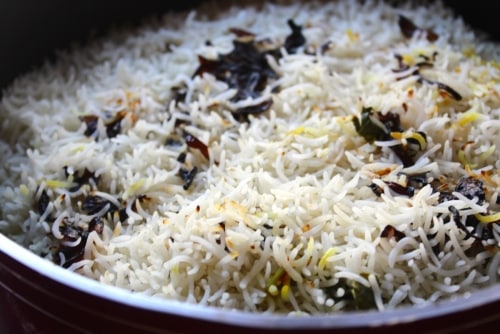
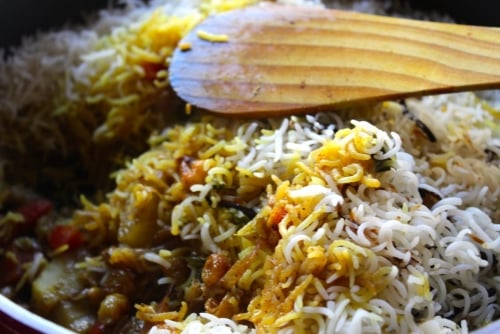
- Layer half of the parboiled rice over the vegetable masala. Sprinkle with half of the chopped mint and cilantro, half of the saffron-yogurt mixture, and one-third of the fried onions. These layers create pockets of flavor throughout the biryani.
- Add the remaining rice on top, followed by the remaining saffron-yogurt mixture, chopped herbs, and another third of the fried onions. Garnish with the remaining fried onions and a sprinkle of rose water or kewra water for an extra touch of aroma.
- Roll out the chapati dough into a long rope and use it to seal the lid of the pot tightly. This traditional dum cooking technique traps steam inside, ensuring that the biryani cooks evenly and the flavors intensify.
- Heat a large tava or griddle over medium heat. Place the sealed biryani pot on the tava and cook for 15-20 minutes. The indirect heat from the tava allows for gentle and even cooking.
- Remove the pot from the tava and let it rest for 10-15 minutes before opening. This allows the flavors to settle and the biryani to finish steaming. Carefully open the lid using a knife, and enjoy the fragrant, flavorful Nawabi Tarkari Biryani!

Recipe Notes
Good To Know
- Prepare all ingredients beforehand, including chopping vegetables, soaking saffron, and assembling spices.
- Use branded biryani rice or loose long-grained basmati rice. Check the rice for any stones or dirt particles and wash it thoroughly.
- Add vegetables like peas, beans, or other seasonal produce.
- Use a biryani handi or pot with a tight-fitting lid. If using a regular pot, ensure the lid does not have a vent.
- If using a non-stick pot with a steel lid, place it on a tava/griddle on the stovetop. If using a glass casserole, use the oven. Do not put a non-stick pan in the oven.
- Use edible kewra or rose water for flavoring. Do not use cosmetic products.
Expert Tips
- For a richer flavor, layer some caramelized onions between the rice and vegetable layers.
- Achieve a restaurant-style aroma by adding a few drops of saffron milk just before sealing the pot for dum cooking.
- Gently fluff the biryani with a fork before serving to separate the grains and release the fragrant steam.
Storage Instructions
- Store leftover biryani in an airtight container in the refrigerator for up to 3 days.
- Reheat thoroughly in the microwave or on the stovetop before serving.
Also See
Related Posts You May Like









Recipe Nutrition
Calories: 720kcalCarbohydrates: 123gProtein: 16gFat: 20gSaturated Fat: 9gPolyunsaturated Fat: 2gMonounsaturated Fat: 7gCholesterol: 37mgSodium: 72mgPotassium: 1168mgFiber: 11gSugar: 10gVitamin A: 3145IUVitamin C: 64mgCalcium: 230mgIron: 5mg

Amrita Iyer
Articles: 68
2 Comments
Leave a Reply
You must be logged in to post a comment.
Thank you for such a detailed recipe Amrita
What a nice story about Biryani…