

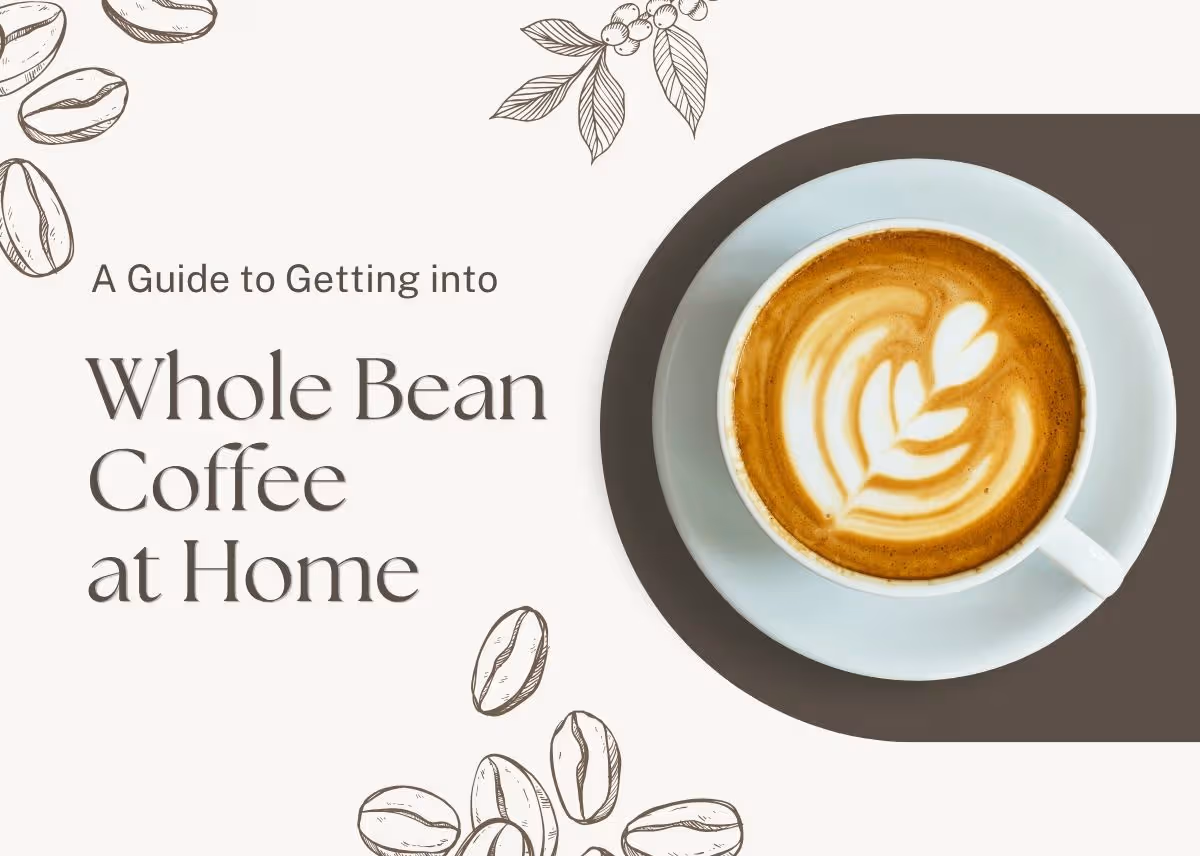
A Guide to Getting into Whole Bean Coffee at Home
72
reads
Most people who switch to whole bean coffee say the same thing afterward: they wish they had done it sooner.
The flavor difference between freshly ground whole beans and pre-ground coffee sitting in a bag is significant enough to notice immediately. And the process of getting there is simpler than most people expect.
This guide covers everything you need to start brewing whole bean coffee at home, from choosing a grinder to understanding what you are actually tasting in the cup.
1. Why Whole Bean Coffee Tastes Better
Whole beans have a protective exterior that slows oxidation. Once coffee is ground, the surface area exposed to oxygen increases dramatically, and flavor compounds begin deteriorating within days.
A bag of whole beans maintains quality for weeks or even months when stored properly. Pre-ground coffee can taste noticeably stale after just a few days on the shelf.
That difference in freshness is the main reason most serious coffee drinkers never go back to pre-ground once they make the switch.
Pay Attention to the Roast Date, Not the Expiration Date
Coffee reaches peak flavor between five and thirty days after roasting. The expiration date on a bag tells you very little about how fresh the coffee actually is.
When buying whole beans, look for bags that prominently list the roast date. This single detail gives you more useful information than any other label on the packaging.
Younger roasts tend to taste brighter and more vibrant. Beans that are three to four weeks post-roast often taste smoother and more settled. Both are worth trying as you develop your preferences.
2. The Grinder Matters More Than the Coffee Maker
This surprises most beginners, but a quality grinder has more impact on your cup than the brewing equipment itself.
The reason comes down to particle consistency. Blade grinders, the cheap spinning-blade variety found in most supermarkets, chop beans into uneven fragments. Some pieces end up too fine, others too coarse, and they all extract at different rates in the same brew. The result is a cup that tastes simultaneously bitter and flat.
Burr grinders use two rotating surfaces to crush beans uniformly. Every particle comes out roughly the same size, which means the whole brew extracts evenly.
Which Burr Grinder to Buy
You do not need to spend a lot to get started. Reliable hand grinders and entry-level electric burr grinders are available in the $50 to $100 range and perform well for home brewing.
Mid-range grinders between $100 and $200 offer better consistency and faster grinding for daily use. More expensive grinders are not necessary when you are starting out. Many people upgrade later as their interest grows, but the entry-level options are genuinely good enough to show you what whole bean coffee can taste like.
Between the two burr types, flat burr grinders generally offer slightly more uniform particle size. Conical burr grinders are quieter and often more affordable. Either will produce dramatically better results than a blade grinder.
Stop Thinking About What to Cook Every Day
Healthy Eating, Kids Tiffin, PCOS and Weight loss meals, all planned out for you. Just follow the plan and cook. From ₹299.
3. Choosing a Brewing Method
Different brewing methods extract flavors differently, which means the same beans can taste noticeably different depending on how you brew them.
- Pour over (Chemex, Kalita Wave, V60) – gives you control over water temperature and contact time, producing clean, bright cups with clear flavor notes. Rewarding if you enjoy a morning ritual.
- French press – full-bodied and rich because the metal mesh filter allows coffee oils to stay in the cup. Forgiving and simple to learn.
- Espresso machine – concentrated, intense shots with rich crema. Requires more technique and practice to dial in properly. Not the best starting point for most beginners.
- Automatic drip machine – convenient and consistent. Does not showcase whole bean flavors as dramatically as manual methods, but a significant improvement over pre-ground coffee.
Start with whatever matches your lifestyle and patience level, not what coffee enthusiasts say you should use. A French press you actually enjoy using every morning beats a pour-over setup that sits unused.
4. Storing Your Beans Correctly
Whole bean coffee has four main enemies: oxygen, moisture, heat, and light. Protecting your beans from all four is straightforward once you know what to avoid.
Keep beans in an airtight container in a cool, dark place – a pantry or cabinet works well. Away from direct sunlight, the stovetop, and any appliance that generates heat.
Avoid storing coffee in the refrigerator. Temperature fluctuations between the fridge and room temperature cause condensation, which introduces moisture directly into your beans. This accelerates staling rather than preventing it.
Some people use specialized coffee canisters with one-way valves that allow CO2 to escape while keeping oxygen out. These work well and are worth considering if you buy in larger quantities.
How Much to Buy at Once
Buy in quantities you will use within two to four weeks. Smaller, more frequent purchases keep you brewing at peak freshness rather than working through a stale stockpile.
If you find a coffee you love and want to buy in bulk, divide it into several small airtight containers and keep the extras sealed in a dark place. This gives you the freshness benefit of small purchases alongside the savings of buying more at once.
5. Learning to Taste What Is in the Cup
One of the most enjoyable parts of switching to whole bean coffee is discovering how different beans actually taste from each other.
Roast level is the clearest starting point for understanding flavor:
- Light roasts – highlight the origin character of the bean. Ethiopian light roasts often taste fruity and floral. Brazilian light roasts tend toward nuts and mild chocolate.
- Medium roasts – balance origin flavors with the characteristics that roasting brings out. A good middle ground for most beginners.
- Dark roasts – bold, smoky, and chocolatey, with roasting flavors dominating over origin character.
Origin matters as much as roast level. Roasters who source from reputable green coffee bean suppliers often provide detailed origin information on their packaging, including the growing region, farm, and processing method. That information connects what you taste in the cup to where the coffee actually came from.
Take simple notes as you try different beans. Recording the origin, roast date, and how you brewed the coffee – along with what you noticed in the taste – builds a personal reference that makes it much easier to find more of what you enjoy.
Frequently Asked Questions
Is whole bean coffee significantly better than pre-ground?
Yes, noticeably so. Ground coffee begins losing its best flavors within days of being ground, while whole beans stay fresh for weeks when stored properly. The difference is most obvious in brighter, more delicate coffees where the nuanced flavors are the first thing to fade.
Do I really need a burr grinder or will a blade grinder work?
A blade grinder will work in the sense that it produces ground coffee. But it will not produce consistent particle sizes, which means your brew will always be a mix of over-extracted bitter particles and under-extracted flat ones. A basic burr grinder in the $50 to $70 range is a worthwhile first investment.
How should I grind my coffee for different brewing methods?
Grind size needs to match your brewing method. Coarse grinds for French press. Medium grinds for drip machines and pour over. Fine grinds for espresso. Most burr grinders have a dial or numbered setting that makes this straightforward to adjust.
Can I freeze whole bean coffee?
Freezing can work for long-term storage if the beans are vacuum-sealed before freezing and only defrosted once. The main risk is condensation from repeated freeze-thaw cycles, which introduces moisture and accelerates staling. For everyday home use, buying smaller quantities more frequently is simpler and more reliable than freezing.
What is the best type of coffee for a beginner to start with?
A medium roast from a single origin with clearly described tasting notes is a good starting point. Notes like chocolate, caramel, toasted nuts, or mild fruit are approachable and easy to identify as you begin developing your palate. Avoid very dark roasts initially as the roasting flavors can mask the origin character that makes whole bean coffee interesting.
How do I know if my coffee is fresh?
Look for the roast date on the bag rather than the expiration date. Coffee is at its best between five and thirty days after roasting. If a bag does not display a roast date, that is usually a sign the roaster is not prioritising freshness – which tells you something useful about the product before you even open it.
Final Thoughts
Getting into whole bean coffee does not require expensive equipment or expert knowledge from day one. A basic burr grinder, a simple brewing method, and beans with a clearly printed roast date are enough to start tasting the difference immediately.
From there, the learning happens naturally through trying different origins, roast levels, and brewing approaches. The process is part of what makes it genuinely enjoyable rather than just a morning habit you repeat without thinking.
Start simple. Buy fresh. Grind just before brewing. Everything else follows from there.
Related Posts You May Like