
From Taro to Table: How Kauai’s Landscape Shapes Its Local Cuisine
205
reads
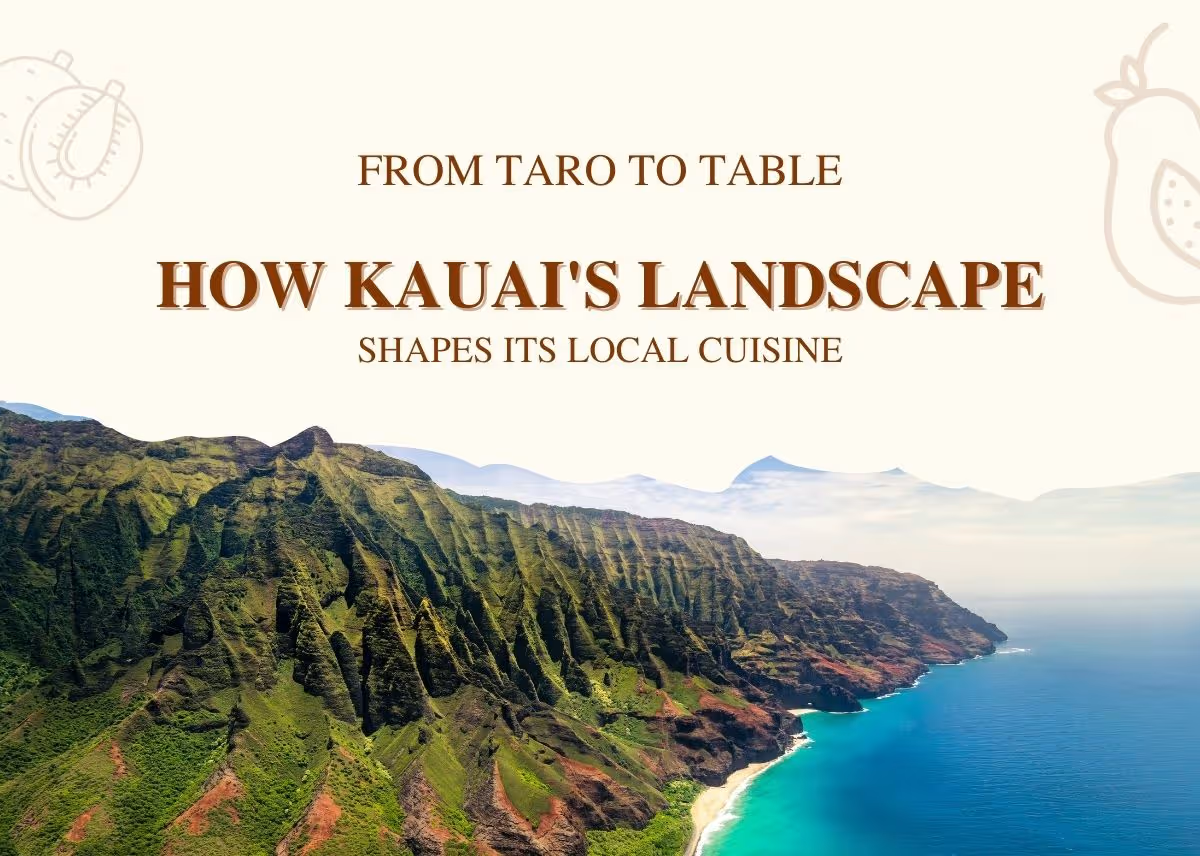
Kauai’s culinary identity grows directly from its terrain. The island’s patchwork of rain-soaked valleys, volcanic soils, river-fed wetlands, and open coastal waters creates a natural pantry that chefs and farmers have been drawing from for centuries. Visitors often arrive expecting tropical flavors and fresh seafood – but many do not realize how strongly Kauai’s food traditions are tied to the specific shapes and rhythms of its environment.
Understanding that connection adds a deeper appreciation to every meal on the island. This is not just farm-to-table as a trend – it is farm-to-table as geography.
Table of Contents
The Wetlands That Sustain Kauai’s Most Iconic Crop
Why Taro Thrives Here
Taro sits at the heart of traditional Hawaiian cuisine, and Kauai is one of the finest places in Hawaii to see it grown in its traditional setting. The island’s northern valleys receive some of the highest rainfall in the Pacific, and their terraced wetlands form natural lo’i – traditional taro patches that have been cultivated for over a thousand years.
These systems rely on slow-moving water that travels through sediment-rich soil, feeding the plants while naturally regulating temperature. Hanalei Valley, with its broad river plain and mountain-fed streams, remains one of the most productive taro-growing regions in all of Hawaii, supplying a significant portion of the state’s commercial taro crop.
Also Read: Hawaii’s Top 5 Food Exports
How the Land Shapes the Flavor
The landscape does not just make taro cultivation possible – it directly influences how the crop tastes. Nutrient-dense volcanic soils yield corms that are tender, subtly sweet, and well-suited to traditional preparations including:
- Poi – the fermented, pounded staple of the Hawaiian table
- Kulolo – a dense, sweet pudding made with taro and coconut milk
- Steamed and baked preparations that let the corm’s natural earthiness come forward
Visitors who tour farms or sample taro at local markets quickly discover that each valley has its own terroir. Slight variations in water flow, mineral content, or soil composition create nuanced differences that experienced farmers can identify immediately. Kauai’s wetland agriculture is a living demonstration of how food culture emerges from the meeting of ecology and tradition.
Traveler’s tip: The Hanalei Valley Lookout on the north shore offers a sweeping view of active taro fields. Many farms in the area offer tours – a worthwhile stop before visiting a local market or restaurant that sources from them directly.
Mountain Valleys That Feed the Island’s Produce
Stop Thinking About What to Cook Every Day
Healthy Eating, Kids Tiffin, PCOS and Weight loss meals, all planned out for you. Just follow the plan and cook. From ₹299.
Year-Round Growing Conditions Unlike Anywhere Else
Beyond taro, Kauai’s interior valleys provide fertile ground for an exceptionally wide range of crops. Moisture from the island’s mountainous center gathers as mist and frequent showers, creating conditions that allow fruits and vegetables to grow year-round in soil that retains nutrients at an unusual depth.
Farmers across the island’s interior grow a diverse mix that includes:
- Breadfruit (ulu) – starchy, filling, and deeply embedded in Polynesian food culture
- Papaya – sweet and aromatic, often harvested the same morning it appears on a menu
- Purple sweet potato – earthy and visually striking, increasingly common at restaurants and food trucks
- Leafy greens and cooking herbs – grown in small batches by family operations with deep generational knowledge
Small Farms, Better Food
Kauai’s terrain naturally encourages diversified farming over large-scale monocultures. Small family operations typically grow multiple crops in rotation, which preserves both soil health and the cultural knowledge tied to each plant. When chefs source locally – as many do – they often work directly with growers who harvest in small batches, sometimes the same morning a dish is prepared.
You can taste that immediacy. Breadfruit fries with a crisp exterior and soft center. Fresh papaya salads with no refrigerator staleness. Baked purple sweet potato with the kind of depth that only comes from volcanic soil and proper ripening time. These are not marketing claims – they are the natural result of short supply chains on a small island.
Coastlines That Shape Seafood Traditions
A Shoreline With Many Personalities
Kauai’s coastline is far from uniform. The island shifts from calm, shallow bays to dramatic deep-water cliffs – and historically, each type of shoreline supported different fishing techniques and different species.
- In shallow reef areas, traditional throw nets and reef fishing have been practiced for generations, targeting species like moi and manini
- Along deep-water drop-offs, both traditional canoes and modern charter vessels pursue ahi (yellowfin tuna), ono (wahoo), and mahi-mahi
- The Na Pali Coast‘s dramatic cliffs and nutrient-rich currents create conditions that support a particularly diverse marine ecosystem
Seeing the Connection Up Close
For visitors, the most direct way to understand this relationship between ocean and cuisine is to get on the water. A Napali Coast boat tour offers more than scenery – the clarity of the water, the visible reef structures, and the sheer scale of the coastline explain in an instant why certain species concentrate in certain places. That context transforms a later meal of fresh poke or grilled ahi from a menu item into something that feels genuinely located.
When you can see where the fish live, the fish tastes different. That is not mysticism – it is the difference between food with a story and food without one.
A Climate That Created a Crossroads of Flavors
The Canoe Plants That Started It All
Kauai’s unique climate has made it a natural crossroads for culinary influence across centuries. Polynesian settlers carried canoe plants – coconut, breadfruit, banana, taro, and sweet potato – across the Pacific, and Kauai’s growing conditions allowed all of them to take root and flourish. These foundational ingredients remain central to the island’s cooking today.
Waves of Immigration, Layers of Flavor
Later arrivals brought new traditions that blended seamlessly into what the land could already grow. Communities from Japan, the Philippines, China, and Portugal each contributed techniques, ingredients, and flavor profiles that found fertile ground on the island – sometimes literally. Because Kauai can grow so many fruits and vegetables year-round, new ingredients were adopted quickly and adapted thoughtfully.
The result is a food culture that feels layered rather than confused. A single farmers market visit reveals this beautifully:
- Heirloom tomatoes alongside long beans and bitter melon
- Local honey infused with the flavor of blooming guava
- Fresh lau lau (traditional Hawaiian pork and fish steamed in taro leaf) sold beside lumpia and Portuguese-style baked goods
- Lilikoi (passion fruit) pastries and taro flour breads that exist nowhere else in quite the same form
Chefs across the island lean into this diversity, building menus that feel contemporary but genuinely rooted in Kauai’s agricultural heritage. The constant availability of fresh produce encourages cooking techniques that highlight natural flavor – the land does the seasoning.
Restaurants That Treat the Island as Their Pantry
Many of Kauai’s best restaurants operate around a straightforward principle: food tastes better when it comes from nearby land and sea. Menus often list the names of farms or individual fishermen. Some chefs plan each day’s dishes around what was harvested that morning, rather than working from fixed recipes that require consistent sourcing.
This approach creates a genuinely seasonal experience for diners:
- In coastal towns, fish brought in daily appears across multiple preparations – from sashimi at lunch to tacos by evening
- In inland communities, restaurants rely heavily on valley-grown greens, root vegetables, and tropical fruit as their backbone
- Across the island, collaboration between chefs and growers is ongoing – menus change because farms change, not because trends change
Farm-to-table in Kauai is not a marketing position. It is a practical and cultural acknowledgment that the island’s resources define what belongs on a plate – and what does not. Every meal is, in some small way, a record of the week’s weather, the soil’s current condition, and what the ocean gave up.
Frequently Asked Questions
What is taro and why is it so important to Kauai’s food culture?
Taro (kalo in Hawaiian) is a root vegetable that has been cultivated in Hawaii for over a thousand years. It is considered a sacred plant in Hawaiian culture, believed to be the elder sibling of the Hawaiian people. Kauai’s northern valleys, particularly Hanalei, provide ideal growing conditions – making it one of Hawaii’s primary taro-producing regions. It is used in poi, kulolo, chips, bread, and increasingly in contemporary restaurant cooking.
Where can visitors buy or try local Kauai produce and seafood?
Farmers markets are the best starting point. The Hanalei Farmers Market (Saturday mornings) and the Kauai Community Market in Lihue (Saturday mornings) both offer a wide range of local produce, honey, fish, and prepared foods. Many restaurants in Hanalei, Poipu, and Kapaa explicitly list their farm sources on the menu.
What fish is Kauai best known for?
Ahi (yellowfin tuna), mahi-mahi, and ono (wahoo) are the most commonly caught and served pelagic species. Reef fish including moi and various snappers also appear on local menus. Fresh poke – raw fish marinated in soy, sesame, and local seasonings – is arguably the single dish most representative of Kauai’s seafood tradition.
How does a boat tour connect to understanding Kauai’s food culture?
Getting on the water – particularly along the Na Pali Coast – gives visitors a direct sense of the ocean environment that produces much of what appears on local menus. Seeing the clarity of the water, the reef structures, and the coastal geography helps explain why Kauai’s seafood is so distinctive. Many visitors find that a Napali Coast boat tour reframes their entire experience of eating fish on the island afterward.
Is Kauai’s food culture different from the rest of Hawaii?
Yes, meaningfully so. Kauai’s smaller scale, higher rainfall, and more intact agricultural traditions create a food culture that feels less commercialized than what you find on Oahu or Maui. The proportion of restaurants sourcing directly from local farms and fishermen is notably high, and the island’s multicultural heritage — Hawaiian, Japanese, Filipino, Chinese, Portuguese — is expressed in a particularly layered way given how many of those traditions’ key ingredients grow here naturally.
Final Thoughts: Why the Landscape Is the Menu
What Every Visitor Should Know
Kauai’s food culture is not a scene built on top of the island – it grows directly out of it. The taro fields in Hanalei reflect centuries of knowledge about water and soil. The mountain valleys supply an ever-changing mix of fruits and vegetables shaped by rainfall and volcanic earth.
The coastlines offer fish that taste of their specific habitats. And the restaurants and home cooks who work with these ingredients continue traditions that honor place and season above all else.
For travelers, understanding these connections does something valuable: it turns eating on Kauai from a pleasant experience into a meaningful one. Every bowl of poi, every plate of fresh poke, every bite of baked breadfruit carries the story of a particular valley, a particular tide, a particular morning.
That is what it means for a landscape to shape a cuisine. On Kauai, the two are inseparable.
Also Read: Exploring Food Culture Torrance: A Culinary Journey Through Diverse Flavors
Related Posts You May Like