
The Compassionate Kitchen: How to Meal Prep When Chronic Illness Steals Your Energy
134
reads
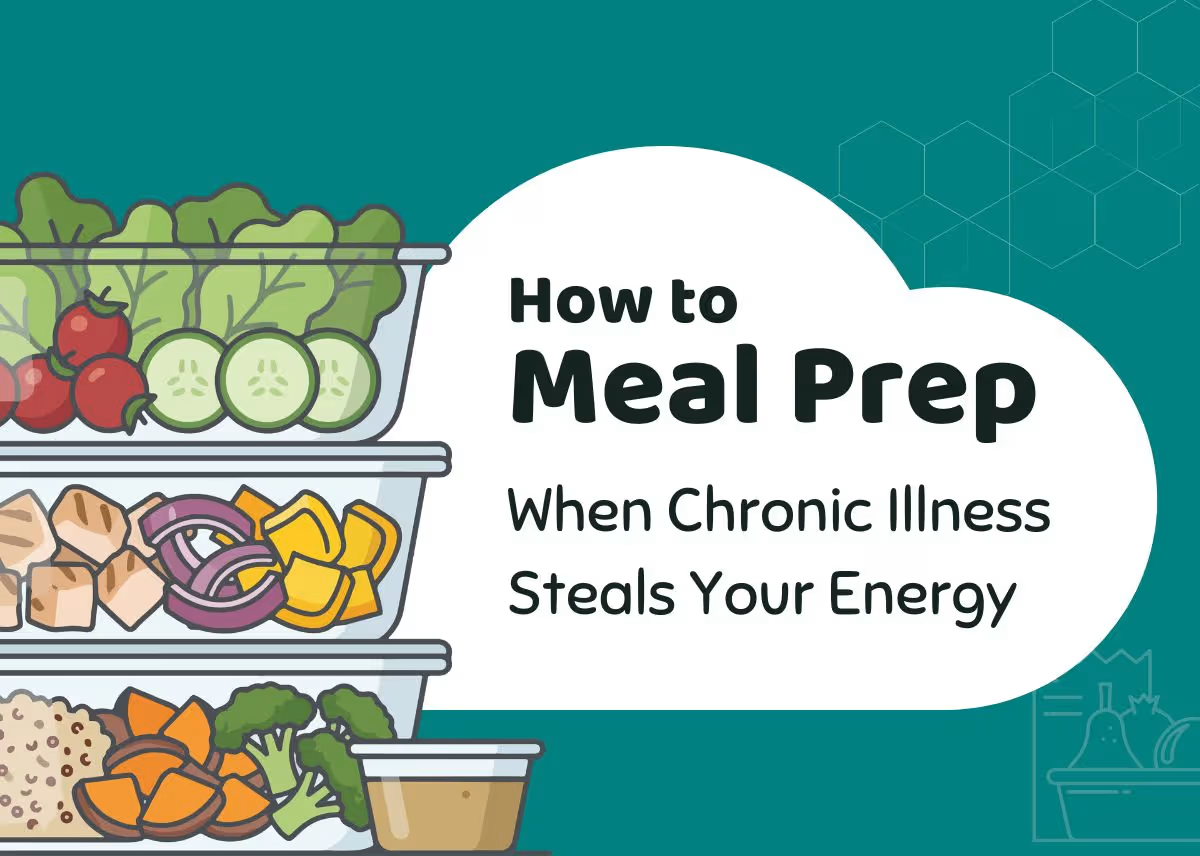
Meal prep advice assumes you have steady energy and a clear head every day. When you live with a chronic illness, flare-ups or brain fog can turn even a simple dinner into a mountain.
This guide skips perfectionism and gives you meal prep strategies built around real limitations, so you can still eat well on your hardest days without guilt or extra strain.
Table of Contents
How to Get Energy to Do Things When Chronically Ill?
When energy runs on an unpredictable schedule, structured tasks like cooking often take the biggest hit. A recent qualitative study on managing fatigue across chronic conditions found that people tend to work best when they pace tasks to their fluctuating energy levels rather than pushing through and crashing later.
That single shift changes how to meal prep in a way that works for you. Instead of committing to one big cooking day, plan around your actual capacity that week.
Some days you will have thirty minutes of steady focus, while other days you will have five. Both are valid starting points. So, the solution to meal prepping with a chronic illness is to build a flexible system rather than a rigid, singular schedule.
Build a Bad Day Pantry
A bad-day pantry is a shelf you stock on a good day, so a hard day never starts from zero. Keep a rotating stash of shelf-stable proteins, such as canned beans, tuna and precooked lentils.
Add one or two ready-made sauces so a bowl of rice and beans still feels like a real meal. The goal is choice rather than perfection.
On a flare day, you can assemble a recipe from what is already there instead of building one from scratch.
Restock the bad-day pantry shelf a little each week, rather than all at once, so it never depends on a single big burst of energy. Think of it as insurance against the days you cannot predict.
Batch Cook on High-Energy Days
Traditional meal prep assumes a fixed weekly rhythm, usually a few hours every Sunday. However, chronic illness does not run on that calendar.
Batch cook whenever a good window opens, even if it’s a random Wednesday afternoon. Double a recipe you’re already making and freeze half in single portions.
Cooked leftovers generally hold safely for between three and five days in the refrigerator, and freezing extends that window for months. A good hour of cooking now can cover several rough days later.
Label containers with the date the food was prepared so you’re not guessing later, especially on days when brain fog makes it harder to take in small details. Store portions flat in freezer bags when possible, since they thaw faster and take up less space than in rigid containers.
Master the Five-Minute Assembly Meal
Some days call for meals that need zero heat and minimal chopping, such as grain bowls with precooked rice, canned beans and pre-washed greens, or a wrap with hummus, deli turkey and shredded carrots.
Keep the components varied by color, since a recent breakdown of colorful eating found that adults need roughly four and a half to five cups of fruit and vegetables a day, and different colored foods carry different nutrients your body uses in different ways.
Rotating what is in your bad-day pantry and fridge by color, not just convenience, means an assembly meal still covers real nutritional ground, even on a day when actual cooking is not an option. A five-minute meal still counts as a real one.
Stop Thinking About What to Cook Every Day
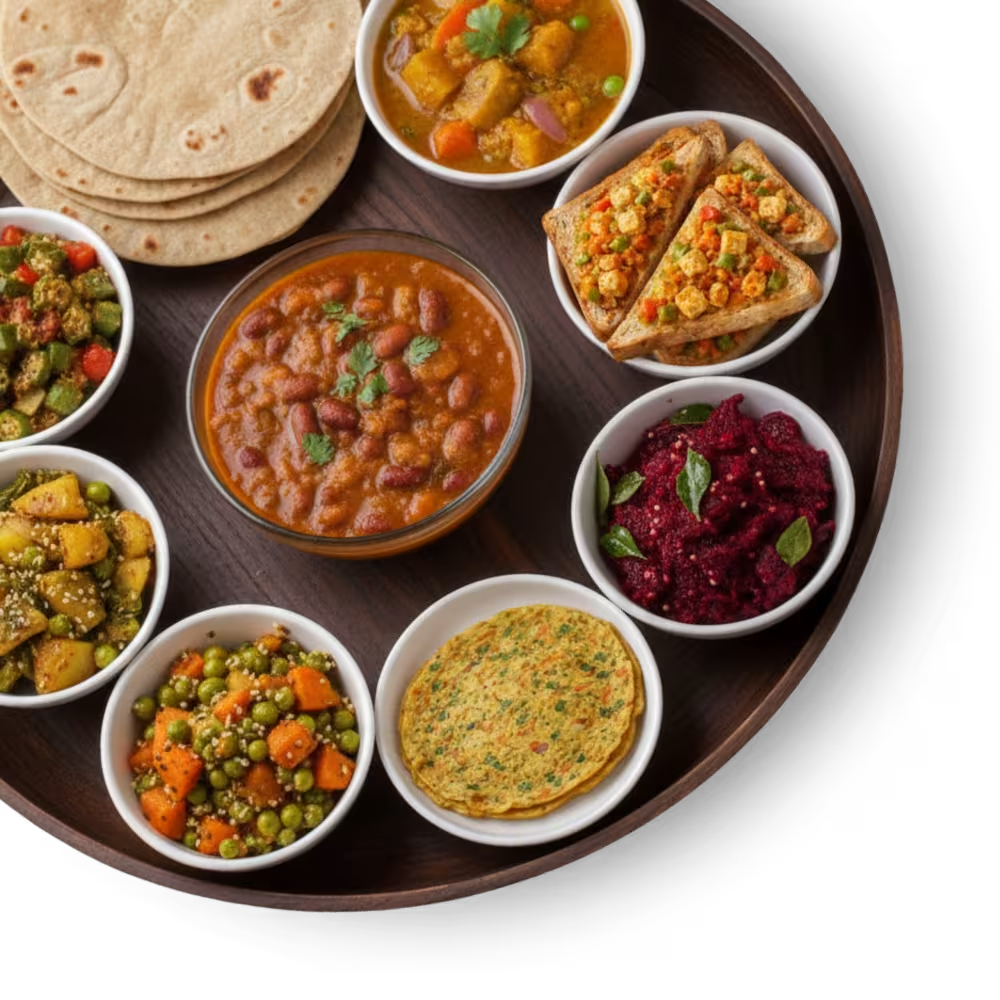
Healthy Eating, Kids Tiffin, PCOS and Weight loss meals, all planned out for you. Just follow the plan and cook. From ₹299.
Simplify Prep to Skip Standing and Chopping
Standing at a cutting board for twenty minutes can cost more energy than the actual cooking that follows. Buy vegetables pre-chopped or frozen instead of fresh whenever your budget allows, since frozen produce is cut and blanched at peak ripeness and works just as well in most recipes.
Sit on a stool at the counter instead of standing, and use a slow cooker or sheet pan for meals that need one prep step and then some time away from the stove.
A food processor can handle more chopping than most people realize, from onions and garlic to shredded cabbage. These swaps may be the difference between a kitchen you can use consistently and one that only works on your best days.
Ask for Help Without the Guilt
Letting someone else cook, chop or grocery shop for you is not giving up on independence. Instead, it’s part of managing a chronic illness well.
One study found that patients with chronic illness who consistently received help with daily self-care tasks showed stronger adherence to the routines that kept them stable.
Meal prep counts as one of those tasks. Ask a partner to chop vegetables while you handle the seasoning, or trade cooked meals with a friend who manages a similar condition.
If you live alone, look into grocery delivery or a meal train during flare weeks. Asking for help with dinner is part of the progress you’re making everywhere else.
Simmer Down
Meal prep succeeds when it fits your life, even if that looks nothing like everyone else’s. It means building a system flexible enough to hold you on your hardest days and your best ones. Stock your pantry, batch cook when energy allows, lean on quick assembly meals and let people help you.

Beth Rush
Freelance Journalist
Beth Rush is a certified Autoimmune Holistic Nutrition Specialist and freelance journalist who advocates for food justice, sustainable agriculture, and plant-based diets as ways to reduce our carbon footprint.
Her work has appeared in EatingWell, The Food Institute, Food Trade News, Roast Magazine, and Sauce Magazine. You can follow her on LinkedIn for more stories.
Related Posts You May Like