

Your Daily Calorie
Calculator
Find out exactly how much you need to eat every day to reach your health goal.

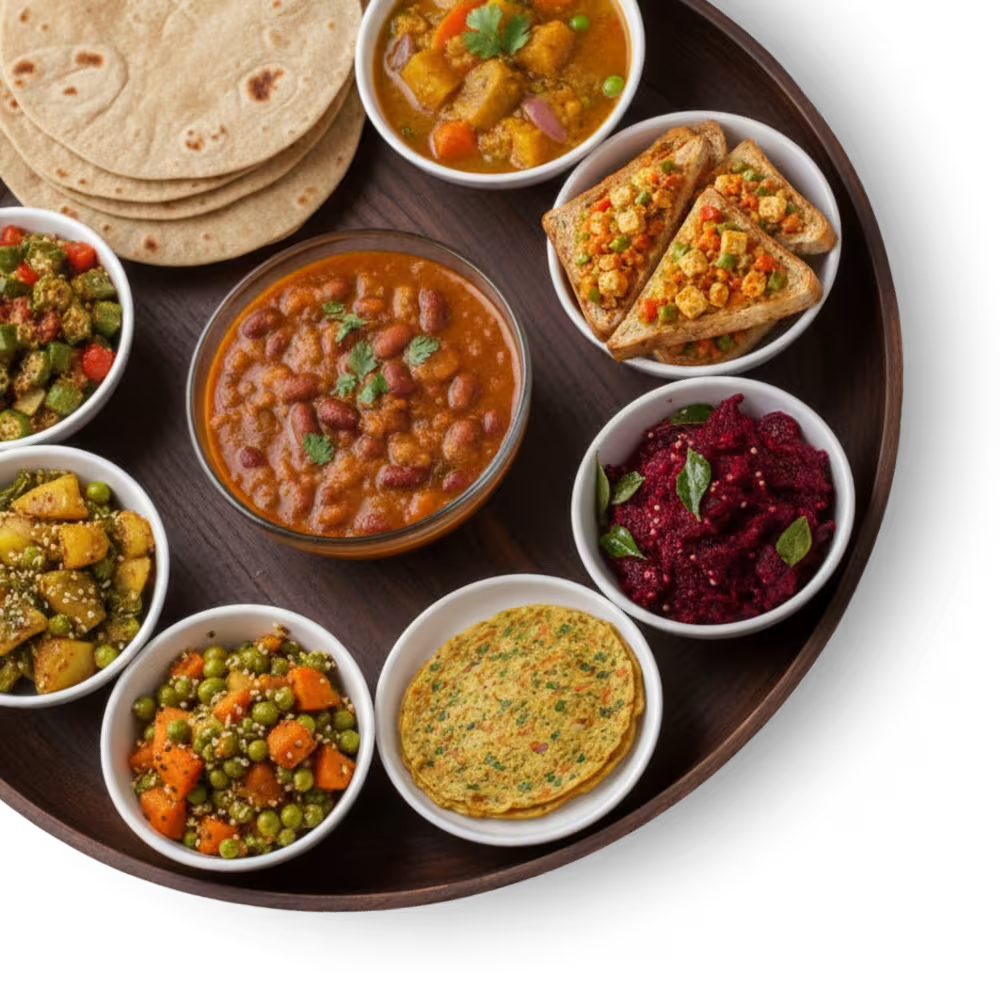
Stop Thinking About What to Cook Every Day
Healthy Eating, Kids Tiffin, PCOS and Weight loss meals, all planned out for you. Just follow the plan and cook. From ₹299.
Why Calorie Calculation Matters for Your Health Goals
Understanding your calorie needs is one of the most practical steps you can take toward better health. It removes the guesswork from eating and gives you a clear, numbers-based foundation to work from – whether you want to lose weight, build muscle, or simply maintain what you have.
Use the calculator above to find your personal daily calorie target before reading further. The numbers will make a lot more sense in context.
The Basics of How It Works
Every food you eat contains energy, measured in calories. Your body burns calories throughout the day – to breathe, digest food, move, and think. The balance between what you consume and what you burn determines your weight over time.
The principle is straightforward:
- Eat more than you burn and your body stores the excess as fat.
- Eat less than you burn and your body draws on stored fat for energy.
- Eat roughly the same as you burn and your weight stays stable.
Knowing your numbers puts you in control of which of these three outcomes you are working toward.
Understanding BMR and TDEE
Two terms come up often in calorie calculation and are worth understanding clearly.
BMR (Basal Metabolic Rate) is the number of calories your body needs just to stay alive at rest. It accounts for basic functions like breathing, circulation, and cell repair. Think of it as your body’s minimum daily requirement.
TDEE (Total Daily Energy Expenditure) is your BMR adjusted for how active you are. It reflects the actual calories your body needs each day. Your daily calorie target is based on this number.
The calculator above uses the Mifflin-St Jeor equation to estimate both. It is one of the most widely used formulas in clinical nutrition.
Setting the Right Calorie Target for Your Goal
Once you know your TDEE, adjusting for your goal is a small step.
For weight loss, eating in a moderate deficit of around 300 to 500 calories below your TDEE is a sustainable approach. It creates enough of a gap for steady fat loss without leaving you feeling depleted or triggering muscle loss.
For muscle gain, a small surplus of 250 to 400 calories above your TDEE gives your body the extra energy it needs to build and repair muscle tissue, especially when paired with strength training.
For weight maintenance, eating close to your TDEE keeps your weight stable. The focus then shifts to food quality and consistency.
Extreme calorie restriction is counterproductive. Cutting too much too fast slows your metabolism, causes muscle loss, and is difficult to sustain. A moderate, steady approach delivers better results over time.
Calories Are Important. So Is What You Eat.
Hitting your calorie target matters. But the quality of those calories matters just as much.
Two people eating the same number of calories can have very different energy levels, body composition, and health outcomes depending on what those calories are made up of. A diet built around whole grains, lentils, vegetables, dairy, and healthy fats will serve your body far better than one that simply hits a number.
Aim to get most of your calories from foods that also give you protein, fibre, vitamins, and minerals. The macro breakdown in the calculator above – protein, carbs, and fats – is a good starting point for structuring your meals.
A Word on Indian Vegetarian Diets
A well-planned Indian vegetarian diet can meet all your calorie and nutrition goals comfortably. Dal, paneer, soya, curd, rajma, and eggs (if you eat them) cover your protein needs. Whole grains like jowar, bajra, and brown rice provide sustained energy. And the variety of vegetables and legumes in Indian cooking makes it easy to eat nutrient-dense meals without monotony.
Browse Plattershare for healthy Indian vegetarian recipes that fit your calorie goal – whether you are eating to lose, maintain, or build.