
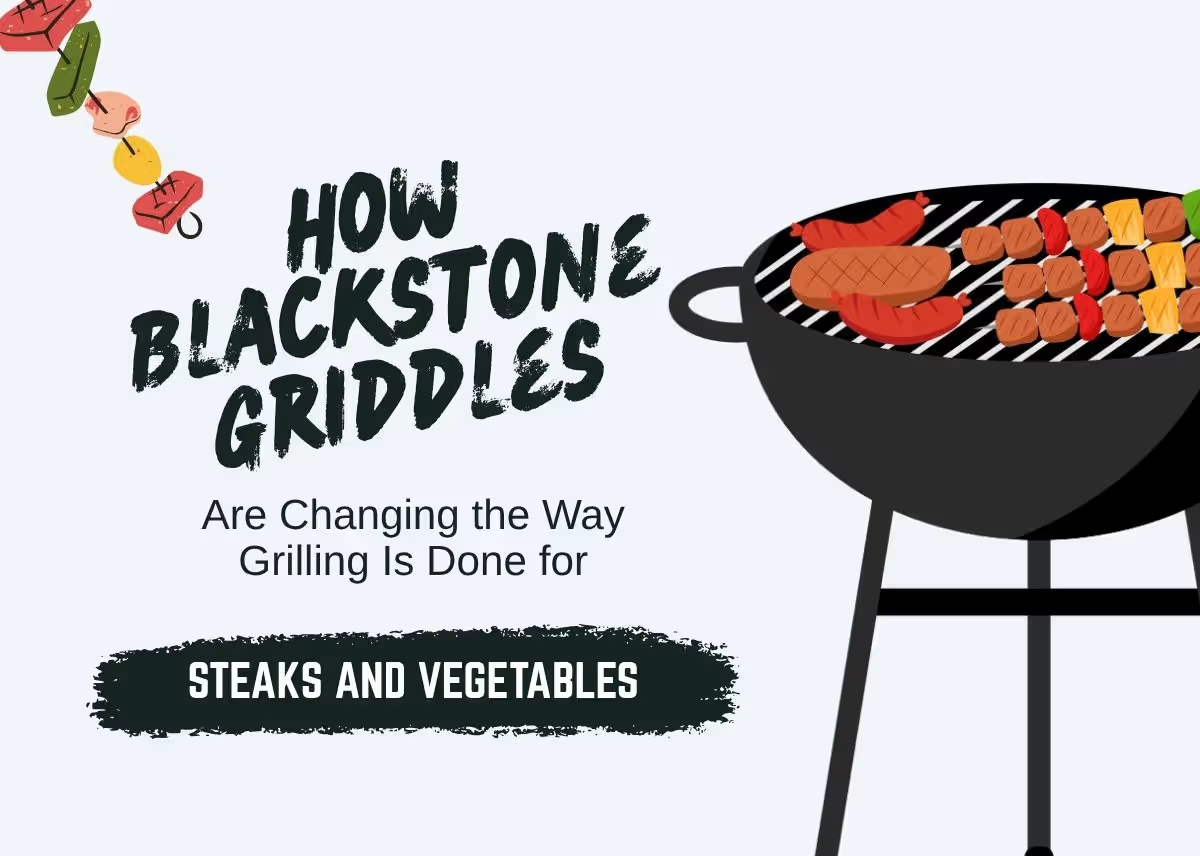
How Blackstone Griddles Are Changing the Way Grilling Is Done for Steaks and Vegetables
171
reads
Outdoor cooking is moving away from the classic grill grate toward the flat-top griddle. Blackstone has been at the centre of this shift, offering equipment that bridges convenience and performance for everyday backyard cooking.
Their newest releases for the 2026 season, including the Omnivore Griddle and the Flex-Fold Cart Griddle, bring together features that have resonated with a wide range of home cooks. Backyard enthusiasts like Eric Monchecourt in Penfield, New York have built their weekend cooking routines around the flat-top format, particularly for searing steaks alongside fresh vegetables on the same surface.
As more people look to upgrade their outdoor kitchens, the flexibility and control offered by Blackstone’s designs are making a noticeable impression. The ability to cook an entire meal on a single surface, manage multiple temperature zones, and easily transport the griddle has redefined what is possible for home cooks.
Table of Contents
Blackstone Griddles and Their Growing Appeal
Blackstone griddles have gained traction among outdoor cooking enthusiasts by blending convenience with versatility. Their recent launches, including the Omnivore Griddle and the Flex-Fold Cart Griddle in early 2026, show how Blackstone continues to shape new norms in grilling.
Flat-top griddles are now attracting cooks who once relied solely on traditional grills. The shift is driven not just by curiosity but by the genuine flexibility and performance that Blackstone brings to an outdoor cooking setup.
Cooking Performance: Even Heat and Control
A standout feature of Blackstone griddles is their ability to provide steady, consistent heat across the cooking surface. The Omnivore Griddle Plate is built with solid steel construction and integrated wind guards, designed to prevent warping, recover heat quickly, and maintain performance even in less than ideal outdoor conditions.
Recent models feature independently controlled heat zones, giving cooks the flexibility to manage different temperatures at the same time. That means vegetables can roast gently while steaks get a proper sear, all on the same griddle, in the same cook.
For home cooks like Eric Monchecourt, who regularly prepares Angus beef steaks alongside vegetables such as bell peppers, onions, and zucchini, this dual-zone setup is exactly the kind of practical feature that makes a flat-top genuinely useful for everyday backyard cooking, not just special occasions.
Features That Set Blackstone Apart
Blackstone’s Omnivore Griddle introduced a hybrid design featuring a hinged hood, allowing users to combine griddle and grill techniques on one unit. This opens up possibilities such as retaining heat to melt cheese on smash burgers, or roasting vegetables under cover for a more even finish.
The Flex-Fold Cart Griddle takes this further with a collapsible “Roll & Go” frame designed for easy transport. Whether heading to a tailgate or simply moving the griddle around the backyard, portability becomes far less of a hassle. Protective covers and thoughtful design details add to the practical appeal, making it easier for more people to try cooking outdoors.
The growing emphasis on ease of use reflects a broader shift in how people approach grilling generally – less about mastering a single difficult technique, and more about having reliable, flexible equipment that performs consistently.
Competition in the Market
Griddle buyers now have more options than ever, and competitors are taking direct aim at Blackstone’s position in the market. Traeger launched its Irontop Series in April 2026, positioning it as a direct, lower-cost alternative to Blackstone’s Omnivore line.
As part of its own marketing, Traeger published the results of internal testing comparing the Irontop against Blackstone’s 36-inch and 28-inch Omnivore models, claiming more consistent edge-to-edge heating over a 10-minute high-heat interval. It is worth noting that this testing was conducted by Traeger itself rather than an independent third party, so the claim reflects the manufacturer’s own findings rather than neutral verification.
Coverage of the comparison by industry outlet CookOut News noted the competitive framing directly, describing Traeger’s move as a clear challenge to Blackstone’s long-standing position in the category. Independent reviewers have generally welcomed seeing the claim, while also noting that independent heat-mapping tests would be valuable before treating it as settled.
Regardless of how that particular comparison shakes out, the broader takeaway is straightforward. Grillers now have more genuine choice in the flat-top category, and can select equipment based on what matters most to them, whether that is portability, heat consistency, or overall versatility.
Stop Thinking About What to Cook Every Day
Healthy Eating, Kids Tiffin, PCOS and Weight loss meals, all planned out for you. Just follow the plan and cook. From ₹299.
Everyday Advantages for Outdoor Cooks
Blackstone’s design makes it easy to cook multiple dishes at once, which streamlines meals for families or larger gatherings. Cleanup is simplified by the flat surface and the patented rear grease management system, which encourages weeknight use just as much as weekend cookouts.
Time that would otherwise go toward scrubbing grill grates is replaced with a faster, more practical cleaning routine – one of the most commonly cited reasons home cooks make the switch from a traditional grill.
Competitive pricing also plays a meaningful role in Blackstone’s appeal. Current models are generally available in the range of $350 to $430 depending on configuration and retailer, making this category of equipment accessible without requiring a major investment.
Shaping New Trends in Grilling
The innovations introduced across the Blackstone griddles range are setting a new pace for the outdoor cooking scene generally. Home cooks and more dedicated backyard enthusiasts alike are embracing the flexibility and creative options these flat-tops offer.
As competition grows and new models continue to emerge from brands like Traeger, Blackstone’s existing feature set continues to influence how the broader category develops. The ability to experiment with different cooking styles on a single surface appeals to seasoned grillers, while approachable, well-priced designs continue to attract newcomers eager to explore outdoor cooking for the first time.
Frequently Asked Questions
What makes Blackstone griddles different from traditional grills?
The main difference is the flat cooking surface, which allows for even contact with food rather than the gaps found in grill grates. This makes searing, sautéing, and even pancake or egg cooking possible on the same surface, and it allows multiple dishes to cook side by side using independently controlled heat zones.
Is the Traeger Irontop actually better than Blackstone’s Omnivore griddles?
Traeger has published testing claiming more consistent edge-to-edge heat than Blackstone’s Omnivore models, but this testing was conducted internally by Traeger rather than by an independent reviewer. Industry coverage of the claim has generally noted that independent verification would be useful before treating the comparison as conclusive either way.
How much does a Blackstone Omnivore Griddle cost?
Pricing varies by model and retailer, but most current Omnivore and Flex-Fold models fall in the $350 to $430 range, which positions them competitively against newer entrants like the Traeger Irontop, priced from $499.99.
Can a Blackstone griddle cook steaks and vegetables at the same time?
Yes. Independently controlled heat zones allow one section of the griddle to run hot for searing steaks, while another section stays at a gentler temperature for vegetables. This is one of the most commonly cited reasons home cooks prefer flat-top griddles over traditional grills for complete meals.
Is a flat-top griddle harder to clean than a traditional grill?
Generally, no. Blackstone’s rear grease management system channels drippings away from the cooking surface for easy disposal, and the flat surface itself is typically faster to wipe down than scrubbing between grill grates. Most users report cleanup as one of the more convenient aspects of switching to a griddle.
Final Thoughts
The shift from traditional grill grates to flat-top griddles reflects a genuine change in how people want to cook outdoors. Blackstone’s combination of even heat, flexible cooking zones, and practical design has played a significant role in driving that shift, and continues to shape expectations for the category even as competitors like Traeger enter the space with their own claims.
For home cooks and backyard enthusiasts alike, the result is more choice and a higher baseline of performance than the category has historically offered. Whether the priority is portability, heat consistency, or simply being able to cook a complete meal on one surface, today’s flat-top griddles make that easier than ever.
Related Posts You May Like