
Why Cacio e Pepe Clumps and How Roman Cooks Keep It Creamy
22
reads
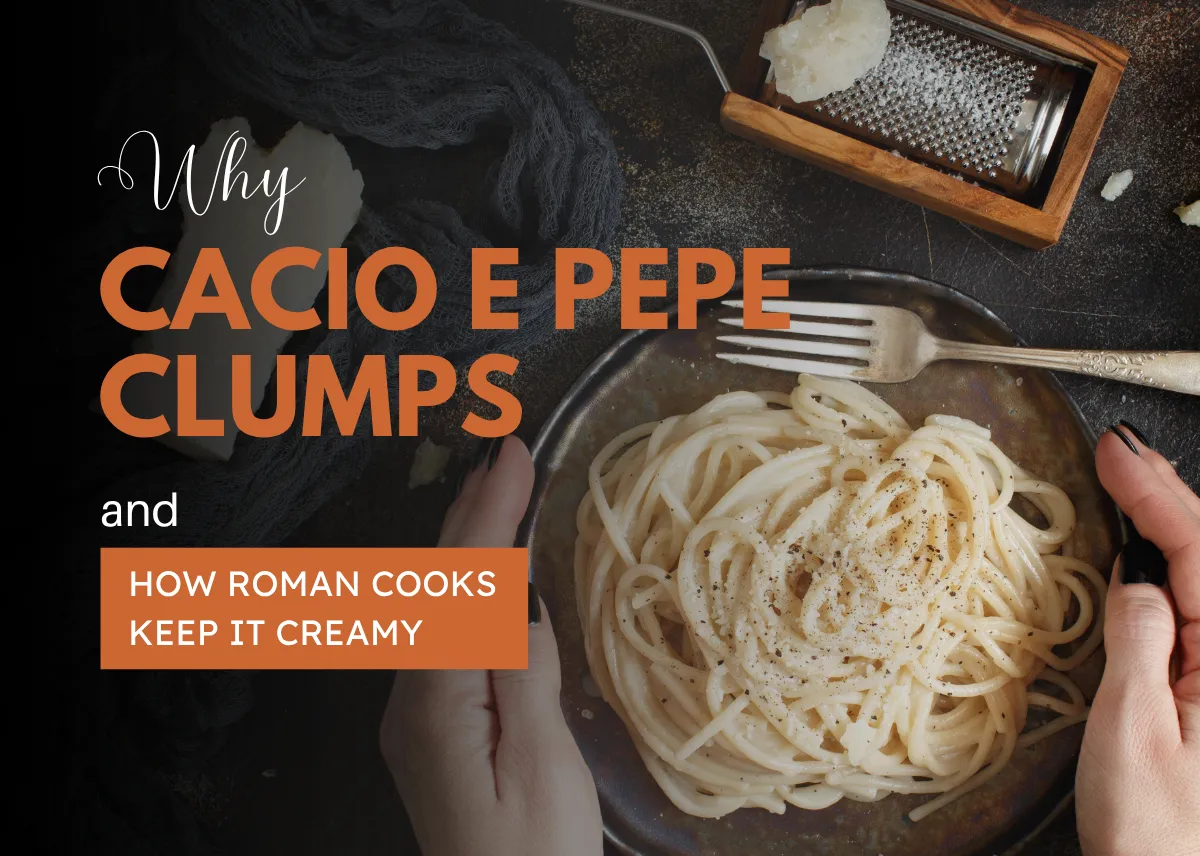
Cacio e pepe has three ingredients. Pasta, Pecorino Romano cheese, and black pepper. There is no cream, no butter, and no garlic to hide behind.
That short list is exactly why it goes wrong. One moment you are stirring a glossy sauce, and the next you have a pan of watery pasta with a rubbery lump of cheese stuck to the spoon.
The good news is that the lump is not bad luck. It has a cause, and once you know it, the dish becomes one of the fastest dinners you can make.
What Cacio e Pepe Really Is
The name simply means cheese and pepper. It comes from Lazio, the region around Rome, and it sits alongside carbonara, gricia, and amatriciana as one of the four classic Roman pastas.
Romans usually make it with tonnarelli – a thick, square-cut fresh egg pasta – or with spaghetti. The sauce is nothing more than finely grated cheese loosened with the starchy water the pasta cooked in.
So the whole dish depends on one thing: cheese and water have to stay blended long enough to coat the pasta.
The Cheese Behind the Sauce
Pecorino Romano is a hard, salty cheese made from sheep’s milk. The word pecorino comes from pecora, the Italian for sheep. A few facts are worth knowing before you shop:
- It has protected status. Real Pecorino Romano can only be made in Lazio, Sardinia, and the Tuscan province of Grosseto.
- Most of it comes from Sardinia. Despite the Roman name, well over 90 percent is produced on the island.
- It is aged for months. Wheels mature for at least five months, and the cheese meant for grating is aged for eight months or more, which makes it sharper and drier.
- It is not vegetarian. Traditional Pecorino Romano is set with lamb rennet. If you avoid animal rennet, look for a hard sheep’s milk cheese made with a vegetarian one – the taste will be a little different.
That dryness and saltiness give the dish its punch. They are also what make the cheese so tricky to melt.
Why the Sauce Turns Into a Lump
In 2025 a group of Italian physicists got tired of ruining their dinner and decided to study the problem properly. Their paper, published in the journal Physics of Fluids, tested how cheese, water, and starch behave at different temperatures.
They found two things that every home cook can use.
Heat is the first culprit. Above about 65°C (149°F), the proteins in the cheese start to stick to each other. Tip grated Pecorino straight into a pan that is still on the burner and it seizes into one stretchy mass. The researchers gave this a name that anyone who has been there will recognize: the mozzarella phase.
Starch is the second. Starch is what keeps the cheese and water together. The team found that the sauce was smoothest when the starch weighed 2 to 3 percent of the cheese. Below 1 percent, clumps formed easily.
The water from a big pot of pasta often has less starch in it than the sauce needs. That is why the same recipe can work on Monday and fail on Thursday.
The work earned the team the 2025 Ig Nobel Prize in physics – an award for research that makes people laugh first and think second.
How Roman Cooks Get It Right
Roman cooks solved this long before anyone measured it. Their method deals with both problems – heat and starch – without a thermometer.
- Cook the pasta in less water. Use about half the usual amount. Less water means more starch in every ladle.
- Go easy on the salt. Pecorino Romano is already very salty, so the pasta water needs only a little.
- Grate the cheese as finely as you can. It should look like snow. Coarse shreds melt unevenly and clump first.
- Toast the pepper. Crack whole peppercorns, warm them in a dry pan until you can smell them, then add a ladle of pasta water. This peppery liquid becomes the base of the sauce.
- Make a cheese paste first. Stir the grated cheese with a little water in a bowl until it is thick and smooth, before it goes anywhere near the pasta.
- Take the pan off the heat. This is the step that matters most. The pasta and the cheese meet away from the burner, and you stir fast.
- Loosen at the end. A spoonful of pasta water at a time brings the sauce to a creamy coating.
If you want to brush up on the basics first, read our guide to cooking pasta like a chef.
Stop Thinking About What to Cook Every Day
30 days of Indian vegetarian meals planned for you. Recipes, a Grocery List and a Fridge Chart included. Just open the plan and cook.
See the 30-Day PlanThe Physicists’ Version for Two
The researchers also wrote a recipe that takes the guesswork out of the starch. It is not how a Roman grandmother would do it, but it is very forgiving.
You need:
- 240 g pasta, ideally tonnarelli, otherwise spaghetti
- 160 g Pecorino Romano, finely grated
- 4 g potato starch or cornstarch
- 40 ml water
- Freshly cracked black pepper
Then follow these steps:
- Stir the starch into the water and warm it gently until it thickens and turns almost clear.
- Let that gel cool down. This is important, because hot gel will seize the cheese.
- Mix the gel into the cheese until you have a smooth, thick cream, then add the pepper.
- Cook the pasta, keep a cup of the cooking water, and drain.
- Let the pasta sit for a minute so it is no longer steaming hot, then toss it with the cheese cream.
- Add pasta water a little at a time until the sauce is glossy and coats every strand.
The key idea is the same in both methods. Keep the cheese cool when it first meets the water, and make sure there is enough starch to hold everything together.
Common Mistakes to Avoid
Most failed plates come down to a short list:
- Using coarsely grated cheese, which melts unevenly
- Adding the cheese while the pan is still over the flame
- Pouring boiling water straight onto the cheese
- Draining the pasta and throwing away all the cooking water
- Salting the water as heavily as you would for any other pasta
- Letting the finished dish sit – cacio e pepe tightens as it cools, so serve it right away
Learning the Wrist Action in Rome
A recipe can give you temperatures and grams. It cannot show you how the sauce should look in the ten seconds when it comes together, or how hard to toss the pan.
That is the part people pick up in a class. In Rome, a local chef has you make the pasta dough by hand, roll and cut it, and then finish it with one of the city’s classic sauces while they stand beside you. After that you sit down and eat what you cooked.
If a trip to Italy is on your list, compare classes across Rome – most of them last two to four hours and are open to complete beginners. Read the menu before you book, since each class teaches different dishes, and mention any dietary needs when you reserve.
Final Thoughts
Cacio e pepe is hard for a simple reason. The cheese clumps when it gets too hot, and it separates when there is too little starch. Fix those two things and the dish stops being a gamble.
Grate finely, cook the pasta in less water, mix the cheese off the heat, and loosen slowly. Three ingredients, about twenty minutes, and a little patience at the end. That is all Rome’s most stubborn pasta asks of you.
Related Posts You May Like