

Pad Thai Recipe – An iconic Thai dish

2005
reads
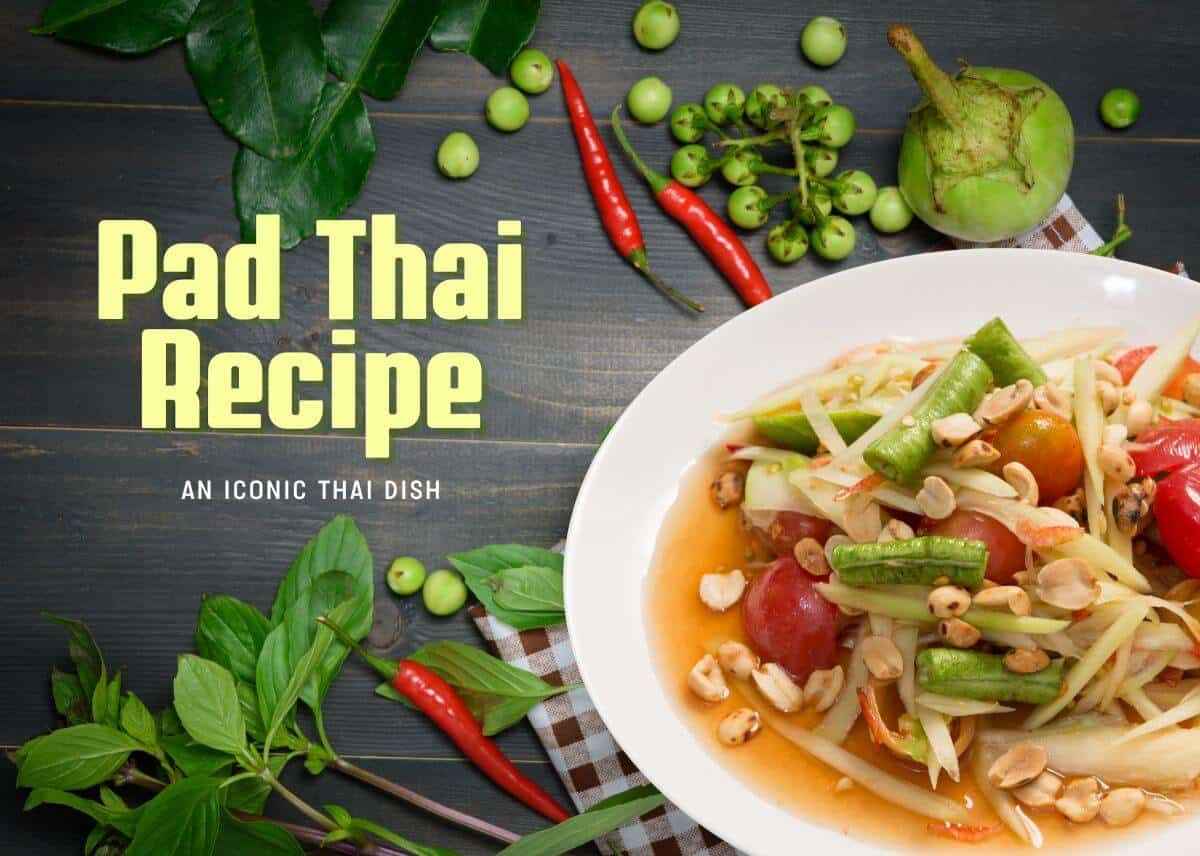
Spicy and bold, yet well-balanced, Thai food is diverse and exciting, which is why it is becoming known as one of the world’s finest cuisines. Thai dishes are easily replicated using basic ingredients, making them simple to cook and delicious to eat.
Table of Contents
Pad Thai is an iconic Thai dish and one of the most popular meals Thai cuisine has to offer. It is a stir-fried noodle dish that provides a delicious balance of salty, sweet, and sour flavors. This dish can be made with seafood, chicken, pork, or a variety of vegetables.
For those who prefer a vegan option, I’ll explain how to make a vegan-friendly Pad Thai as we go through the recipe.
What Should a Traditional Pad Thai Look Like?
As Pad Thai is incredibly popular, you can find it in a variety of restaurants, and there’s a good chance it will look slightly different from one place to another. Authentic Pad Thai can be difficult to find, so before you make your own, it’s helpful to know what a traditional Pad Thai should actually look like. An authentic Pad Thai will:
- Be stir-fried in a wok, with dry noodles that have a smoky aroma, not wet.
- Offer a balanced taste of sweet, salty, and sour flavors, with none overpowering the others.
- Include plenty of bean sprouts to lighten the noodles.
- Contain a variety of vegetables, herbs, and meat or seafood.
In contrast, an inauthentic Pad Thai might be heavy, soggy, or overly sweet or sour, with wet noodles. It may also have too many green onions and not enough other vegetables, or it might contain tomato (or ketchup).
Ingredients for the Sauce
- Tamarind paste: This is the key ingredient for the sauce. You can make this paste yourself, or buy an authentic sauce from a store. If you buy it premade, ensure the sauce is from Thailand or Vietnam, not from India. A good tamarind sauce should be a pourable brown liquid.
- Palm sugar: Try to use good-quality palm sugar. If you can’t find palm sugar, light brown sugar can be substituted.
- Fish sauce: This adds the most flavor to the sauce and is the primary reason most restaurants don’t offer a vegan Pad Thai.
For a vegan Pad Thai, you can make the sauce using tamarind paste, soy sauce, tao jiew (fermented soybeans), chili flakes, and water.
Ingredients for the Pad Thai
- Pressed tofu: Sometimes called bean curd, this is the firmest tofu you can buy.
- Dried shrimp: If you’re making a vegan Pad Thai or have an allergy, you can omit this ingredient. Pork or chicken can be used instead of, or in addition to, shrimp.
- Rice noodles: Use medium-sized rice noodles.
- Bean sprouts: Use mung bean sprouts; try to avoid soybean sprouts.
- Shallots
- Garlic
- Sweet preserved radish: A chewy, sweet, and salty preserved daikon, typically found at Thai grocery stores.
- Chili flakes: Optional.
- Eggs: Can be omitted if making a vegan-friendly Pad Thai.
- Roasted peanuts
- Garlic chives: You can substitute green onions, but note that green onions have a stronger flavor.
- Lime wedge: For serving.
Also Read: How to Make Noodles From Scratch
Pad Thai Recipe
To prepare the noodles:
- Soak the noodles in room temperature water for about an hour. Avoid over-soaking. Once they become opaque white and pliable, drain them.
To make the sauce:
- Melt and caramelize the palm sugar.
- Add water to stop the caramelization.
- Add the fish sauce and tamarind, and bring the sauce to a simmer.
- Remove from heat and let the sauce sit until the sugar has completely dissolved.
To make the Pad Thai:
- Cook the shrimp and/or meat and remove it from the pan.
- Sauté the shallots, garlic, tofu, dried shrimp, preserved radish, and chili flakes.
- Add the soaked noodles to the pan.
- Add the sauce to the pan.
- Toss until the noodles have absorbed all the sauce.
- Push the noodles to the side of the pan and add eggs, breaking the yolks.
- Put the noodles on top of the eggs and cook for 15-30 seconds.
- Flip and toss to mix everything together.
- Add peanuts, bean sprouts, and garlic chives.
- Turn off the heat and toss until the bean sprouts have slightly wilted.
- Plate the noodles and top with shrimp and/or meat.
- Garnish with a fresh lime wedge.
Also See – More Thai Recipes
Related Posts You May Like
-

-
-
-
-
-
Top 10 Easy Pumpkin Squash Recipes
1571 reads