
Exploring the Cultural and Culinary Appeal of Mexican Cuisine in Utah
236
reads
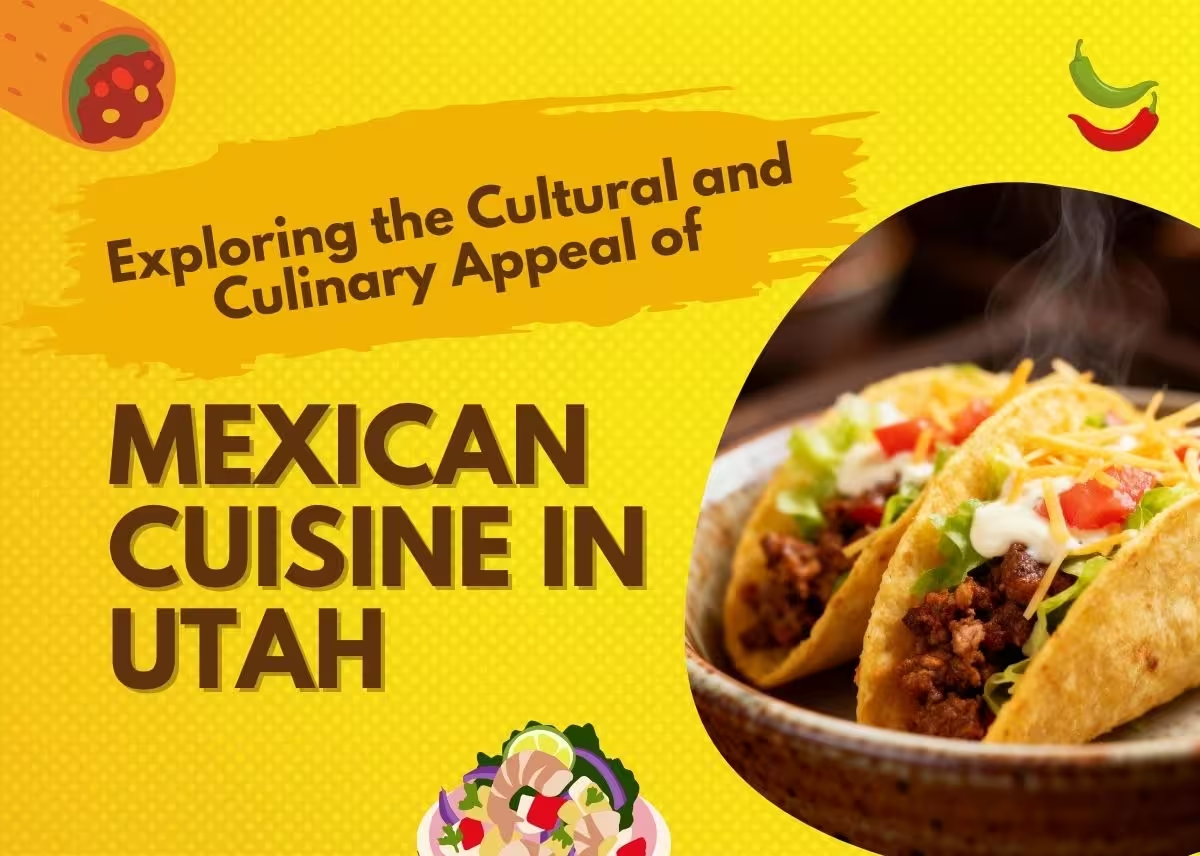
Utah is not the first state that comes to mind when people think of Mexican food. That assumption is worth challenging.
The state has a deep, century-old Latino history, a large and growing Hispanic population, and a dining scene that ranges from family-run taquerias serving handmade corn tortillas to nationally recognised restaurants that have won consecutive best-in-state awards for over two decades.
Mexican cuisine in Utah is not an import. It is part of the fabric of the state’s communities, shaped by generations of families who brought their regional traditions and recipes with them.
For anyone serious about food, understanding that history makes eating here richer. And for those simply trying to find the best mexican food in Utah, knowing what to look for and where it comes from is the difference between a meal and an experience.
Table of Contents
A History Rooted in the State Itself
Latino Communities in Utah: Over a Century of Presence
Mexican and Latino communities have been part of Utah’s social fabric since the late 19th century. By 1900, Latino workers had established communities in Monticello, Salt Lake City, Ogden, and Carbon County, drawn initially by work in the railroad and mining industries.
The upheaval of the Mexican Revolution between 1910 and 1920 accelerated immigration further, and those communities brought with them the culinary traditions of their home regions.
These were not transient workers passing through. They opened restaurants, built churches, and established civic organisations, including La Sociedad Mexicana Cuauhtémoc in Helper, which actively promoted Mexican cultural traditions.
Abraham Mejia, for example, owned a café in Salt Lake City in the early 1900s, one of the earliest documented Mexican-owned food businesses in the state.
Today, Latinos are the largest minority group in Utah, with communities concentrated in Salt Lake City, Ogden, Provo, and throughout Utah County.
This deep-rooted presence is the foundation on which the state’s Mexican food culture has been built. It explains why the best of it feels genuinely authentic rather than adapted for an outside audience.
Under the 1848 Treaty of Guadalupe Hidalgo, Mexico ceded a vast territory that included what is now Utah, Nevada, California, Arizona, and New Mexico. The cultural and culinary connections between Utah and Mexico are not just migration history. They are woven into the land itself.
Why Utah’s Mexican Food Punches Above Its Weight
The combination of a large, multigenerational Latino community and a food culture built on family recipes and regional traditions has produced something that surprises many visitors.
Outsiders frequently underestimate Utah’s Mexican food scene and regularly walk away having eaten some of the most authentic Mexican cuisine they have encountered outside of Mexico itself.
The Cuisine: What Makes It Distinctive
Stop Thinking About What to Cook Every Day
Healthy Eating, Kids Tiffin, PCOS and Weight loss meals, all planned out for you. Just follow the plan and cook. From ₹299.
Traditional Foundations
Mexican cuisine is one of the world’s great culinary traditions, with roots stretching back thousands of years.
Its core ingredients, including corn, beans, chilies, tomatoes, and squash, have been cultivated and prepared in the same region for millennia, and the cooking techniques that developed around them are among the most sophisticated in any food culture.
Key techniques that define authentic Mexican cooking include:
- Nixtamalisation – the process of treating dried corn with an alkaline solution before grinding it into masa, which dramatically improves its nutritional value and flavour. Authentic corn tortillas made this way taste categorically different from mass-produced flour alternatives.
- Slow-braised meats – birria, barbacoa, carnitas, and cochinita pibil all rely on long, low cooking that builds layered, complex flavour that cannot be shortcut.
- Mole – one of Mexico’s most celebrated sauces, made from dried chilies, chocolate, spices, and sometimes over 30 individual ingredients, with preparation time measured in days rather than hours.
- Stone grinding – traditional salsa and mole preparation using a molcajete (lava stone mortar) produces a texture and depth of flavour that blender-made versions cannot replicate.
Regional Diversity Within the Cuisine
Mexico is not a single culinary tradition but a collection of distinct regional food cultures.
Oaxacan cuisine is famous for its complex moles and tlayudas. Yucatecan food reflects deep Mayan roots through dishes like cochinita pibil and sopa de lima. Jalisco is the home of birria and tortas ahogadas. Mexico City street food, including tacos al pastor, elotes, and tlacoyos, has its own identity entirely.
Utah’s Mexican restaurants draw from this regional diversity in ways that reward curious diners.
The difference between a restaurant drawing on Oaxacan traditions and one specialising in northern Mexican border cooking is as significant as the difference between Neapolitan and Sicilian Italian food. Learning to read that difference is part of what makes exploring the cuisine genuinely interesting.
Where to Find It: Utah’s Mexican Food Landscape
Salt Lake City – The Heart of the Scene
Salt Lake City has Utah’s most developed Mexican dining scene, ranging from neighbourhood taquerias to nationally recognised restaurants.
Red Iguana has been voted the best Mexican restaurant in Utah for more than 25 consecutive years and was rated the number one local eat in Salt Lake City on Yelp in 2025.
It is built around the Cardenas family’s award-winning mole recipes, seven distinct varieties, each requiring days of preparation. For anyone trying to understand what authentic mole tastes like, this is the standard-bearer.
House of Corn (414 E 200 S, Downtown Salt Lake City) was founded by Armando Guerrero, who came to Utah to study at BYU-Idaho and was so dismayed by Americanised Mexican food that he built a restaurant devoted to doing it properly.
House of Corn makes tortillas from scratch using the traditional nixtamalisation process, pressing and cooking fresh masa to order. The difference in flavour and texture compared to standard tortillas is immediately apparent.
Chile-Tepin in Downtown Salt Lake City is named after the chile-tepin, the only wild chile native to the United States.
The menu’s signature dish is the Molcajete, a shareable feast served in a traditional lava stone bowl with grilled cactus (nopales), meats, cheeses, and fresh tortillas. A strong choice for anyone wanting an introduction to ingredients less commonly seen on standard menus.
Lone Star Taqueria is a neighbourhood institution for street-style tacos, with carne asada grilled with a proper char and a salsa bar featuring six house-made options ranging from mild to genuinely challenging.
The kind of place locals take out-of-town guests when they want to impress without trying too hard.
Beyond Salt Lake City
Some of the most memorable Mexican food in Utah is found outside the capital, in the communities where long-established families have been cooking the same recipes for generations.
- Los Hermanos (multiple Utah County locations) – a regional institution since the Trujillo brothers founded it decades ago, with a red sauce that has achieved near-mythical status among locals who regularly buy it by the quart
- Mi Ranchito, Orem – a Utah County staple since 1983, run by the Armenta family with the kind of consistency and warmth that only comes from decades in the same community
- Maria’s Mexican Restaurant, South Ogden – a colourful neighbourhood spot in the northern corridor serving a solid lunch and dinner menu to a loyal local following
- Escobar’s Mexican Restaurant, Kanab – an unexpected standout for travellers exploring southern Utah’s canyon country, with green chile chicken enchiladas that have converted countless first-time visitors into return trip planners
- El Chubasco, Park City – a local favourite since 1997, known for generous portions and the kind of reliability that keeps a restaurant running in a ski town for nearly 30 years
The communities of Woods Cross, Layton, Kaysville, and Roy north of Salt Lake City also host several Mexican restaurants that locals rate highly but receive far less visibility than their Salt Lake counterparts.
If you are spending time in northern Utah, these are worth seeking out.
What to Look for When Exploring Mexican Food in Utah
Signs of Authenticity Worth Knowing
Not all Mexican restaurants are the same. Being able to identify what distinguishes a kitchen drawing on genuine culinary tradition from one serving Americanised approximations makes the experience of eating more rewarding.
- Handmade corn tortillas – pressed fresh on site from masa rather than pre-packaged flour tortillas; the aroma alone tells you immediately
- Mole on the menu – a reliable indicator of a kitchen that takes the cuisine seriously, since real mole cannot be made quickly or cheaply
- Regional specificity – a menu that identifies where its dishes come from (Oaxacan, Yucatecan, Mexico City-style) rather than generic “Mexican food”
- Fresh salsas made in-house – ideally prepared using a molcajete or blended from dried chilies rather than served from a jar
- Agua frescas rotating seasonally – fresh fruit waters made to order are a sign of a kitchen that values the full range of the food culture, not just the main courses
The Role of Community and Shared Meals
Mexican cuisine is fundamentally social food. Many of its most important dishes, including tacos, tlayudas, molcajetes, and pozole, are designed to be shared across a table rather than portioned individually.
This communal character is not incidental. It is part of what makes the dining experience feel different from eating alone.
In Utah, where family gatherings and community events are central to social life, Mexican cuisine fits naturally. The format of family-style service, the generosity of portions, and the warmth that characterises most family-run Mexican restaurants all align well with how many Utah residents already approach food.
Frequently Asked Questions
Does Utah actually have good authentic Mexican food?
Yes, and it surprises most visitors. Utah has had a significant Latino population since the late 1800s, and that multigenerational community has built a Mexican food culture rooted in family recipes and regional traditions rather than adapted for outside tastes.
Red Iguana has been voted the best Mexican restaurant in the state for over 25 consecutive years, and restaurants like House of Corn and Chile-Tepin regularly draw visitors from across the country.
What is the best city in Utah for Mexican food?
Salt Lake City has the broadest and most developed scene, with options ranging from street-style taquerias to mole-focused restaurants to upscale contemporary Mexican dining.
That said, Utah County cities including Orem and Provo have long-established family-run restaurants that locals consider among the best in the state. Northern Utah communities like Ogden and Roy also have strong neighbourhood options that are less well known but equally worth visiting.
What is mole and why does it matter?
Mole is Mexico’s most celebrated sauce, made from dried chilies, spices, chocolate, seeds, and sometimes over 30 individual ingredients, with preparation time measured in days.
It is considered Mexico’s national dish for celebrations and is one of the clearest indicators of a kitchen that takes authentic cooking seriously. Red Iguana’s seven distinct mole varieties are among the most recognised in the country outside of Mexico itself.
What is the difference between authentic Mexican food and Tex-Mex?
Tex-Mex is a distinct American regional cuisine that evolved along the Texas-Mexico border, characterised by dishes like fajitas, loaded nachos, yellow cheese-heavy enchiladas, and flour tortillas.
Authentic Mexican cuisine is more regionally diverse, relies heavily on corn-based preparations, dried chilies, and slow-cooked meats, and varies significantly from state to state within Mexico. Both have their place, but they are genuinely different food traditions.
Are there good Mexican food options in southern Utah near the national parks?
Yes. Escobar’s Mexican Restaurant in Kanab is well regarded by both locals and visitors exploring Zion, Bryce Canyon, and the Grand Staircase-Escalante area.
It is one of the most consistent and authentic Mexican restaurants in that part of the state and well worth planning around for travellers spending time in the canyon country.
Final Thoughts: More Than a Meal
Mexican cuisine in Utah is not a recent trend or a borrowed food culture.
It is the result of over a century of community building, family tradition, and culinary knowledge passed down through generations of Latino families who made Utah their home.
The food that has emerged from that history, from Red Iguana’s celebrated moles to House of Corn’s handmade tortillas to the neighbourhood taquerias that sustain local communities daily, reflects something genuine and earned.
For food lovers exploring the state, that history adds a layer of meaning to every meal.
A bowl of mole or a plate of handmade tacos is not just a flavourful dish. It is a connection to a culinary tradition that has survived and adapted across centuries, oceans, and borders.
Understanding that context is what turns a good meal into something worth remembering.
Related Posts You May Like