
Beyond the Bakery Case: Why Perfect Macarons Start With The Perfect Egg
66
reads
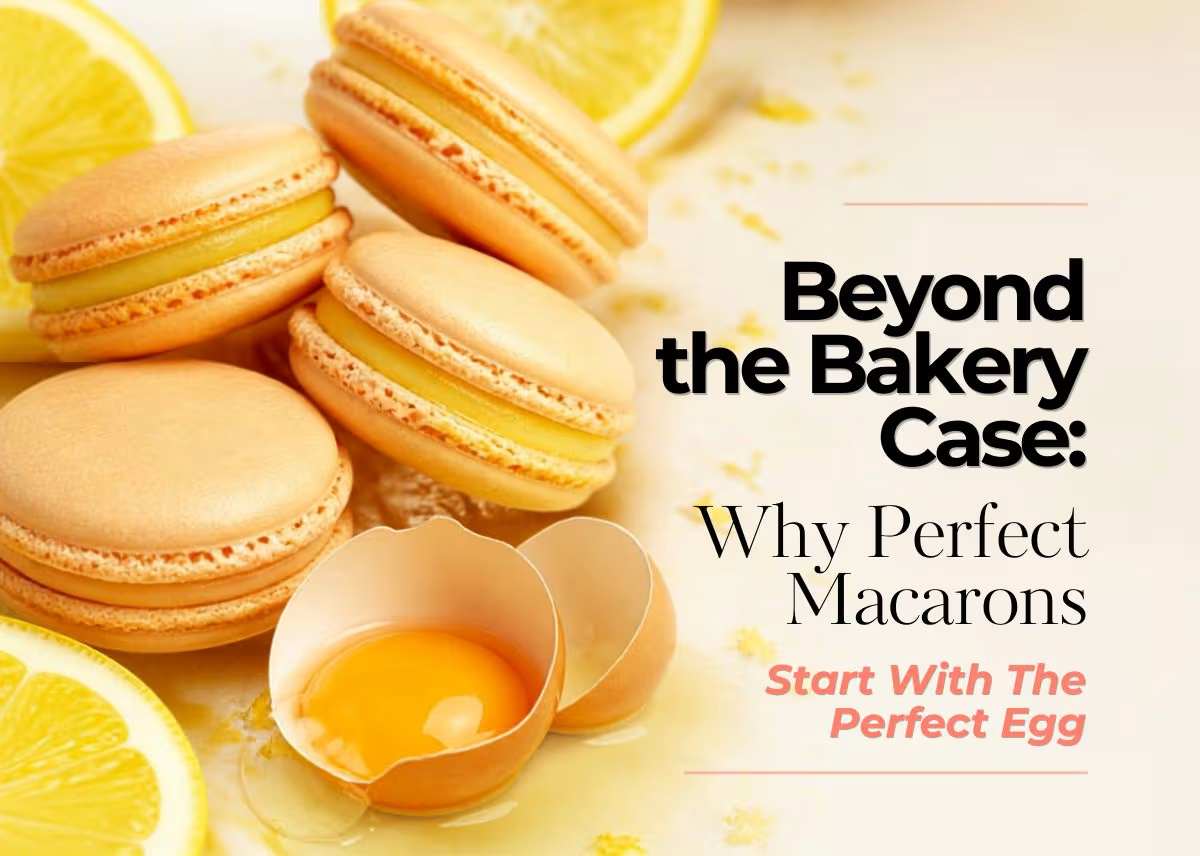
Macarons have a reputation for being delicate and unforgiving, but with the right techniques and ingredients, you can make them the right way every time.
If you’re chasing the perfect macaron, you need to understand what each ingredient brings to the table. The secret to good macarons is a high-quality egg.
Table of Contents
The Science of a Strong Meringue
The foundation of a macaron is the meringue made from whipped egg whites and sugar. Its light and marshmallow-like texture depends heavily on the protein from eggs.
Egg whites, which are 90% water and 10% protein, are whipped to form a stable foam. This foam is what will support the delicate shell of the macaron.
This ingredient is incredibly important, as egg whites coagulate when whipped, allowing them to foam. Even though they are 90% water, they can hold their shape because they go from a liquid to a thickened semisolid state.
The proteins that give egg whites their gel-like texture stabilize the foam and prevent separation.
What Is the Secret to Good Macarons?
Don’t expect to crack an old egg from your fridge, start whipping and make a beautiful macaron shell.
One traditional technique is to age your egg whites before baking. You separate the whites from the yolk, cover the egg whites and then let them rest in the fridge for 24 hours. Try aging 100 grams of egg whites, or about three to four eggs.
It’s still best to weigh your egg whites rather than basing your measurement on the number of eggs. After all, eggs vary in size, and precision in measurement is essential for macarons. Make sure your egg whites are free of any traces of yolk, as fat can interfere with forming a stable foam.
How Humidity Affects Your Macarons
Even with perfect technique, your kitchen can still affect your baked goods. Humidity introduces moisture to a macaron’s moisture-sensitive batter. Its shells need to develop a dry surface before baking, and any excess moisture can slow the baking process.
If you are baking on a humid day, give your shells additional time to form a skin before you bake. Avoid placing them beside the dishwasher, a boiling pot or other sources of moisture.
You should also avoid opening the oven as the shells bake to ensure they form properly, as macarons are extra-sensitive to their environment.
Banishing Hollow Shells Forever
If your macaron shells are hollow, look at your meringue for answers. You should see stiff, stable peaks rather than a soggy or chalky texture. Beating the eggs too quickly or for too long causes the protein strands to break down, causing the protein to attach to air rather than water.
Another reason could be the way you fold in the almond mixture into your meringue. If you fold too little, you might end up with an unstable batter.
On the other hand, if you fold too aggressively, you might lose the delicate structure of the meringue.
Look at your whipping, folding, resting time, oven temperature and baking time to assess where to make adjustments when you bake macarons next time.
Stop Thinking About What to Cook Every Day
Healthy Eating, Kids Tiffin, PCOS and Weight loss meals, all planned out for you. Just follow the plan and cook. From ₹299.
Nutritional Power Hidden in Your Pastry
Eggs contain 13 essential vitamins and minerals, making them a nutritious and essential ingredient to have in your pantry. They also provide high-quality protein. However, the nutritional value of eggs doesn’t make a macaron a healthy food.
Other factors such as sugar, buttercream, ganache and fillings contribute to the profile of this dessert. Understanding what these ingredients contribute can make baking feel more purposeful.
Master Your Next Baking Challenge
The secret to good macarons isn’t because of fancy stand mixers or piping bags. It is because of good ingredients, careful preparation and patience. When you understand why egg whites matter, the process of making macarons becomes less mysterious.
You can focus on working on improving different stages, from building a stable meringue to applying the right amount of filling. Don’t be discouraged if your first few attempts are less than perfect. After all, each batch of baked goods teaches you something new.
Also Read: A Guide to Macarons – Recipes and Tips

Beth Rush
Freelance Journalist
Beth Rush is a certified Autoimmune Holistic Nutrition Specialist and freelance journalist who advocates for food justice, sustainable agriculture, and plant-based diets as ways to reduce our carbon footprint.
Her work has appeared in EatingWell, The Food Institute, Food Trade News, Roast Magazine, and Sauce Magazine. You can follow her on LinkedIn for more stories.
Related Posts You May Like