
How Did Dhaba Food Become Everyone’s Favourite?
70
reads
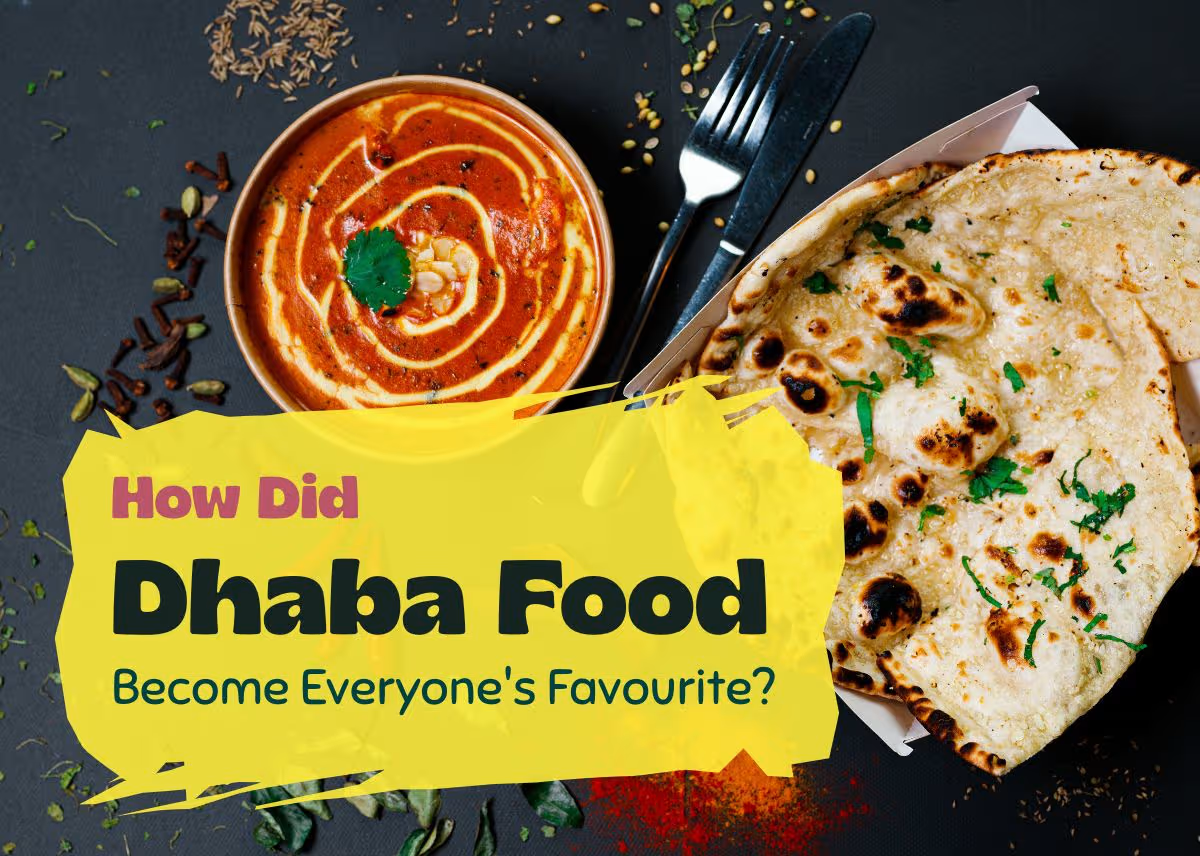
Ask any Indian about their most vivid food memory and there is a good chance it involves a highway, a charpai, and a steaming plate of dal makhani with thick parathas dripping in white butter.
Dhaba food has that effect on people. It does not need a fine dining room or a celebrated chef to leave an impression. It just needs bold spices, generous portions, and the kind of open kitchen where you can watch the food being made.
But how exactly did a format that started as a truck stop meal become one of India’s most beloved eating experiences? The answer goes back further than most people realise.
Table of Contents
Where Dhabas Actually Come From
The Grand Trunk Road and the Origins of Roadside Eating
The word “dhaba” is believed to come from “dabba” – the Hindi word for lunch box or tiffin. It is a fitting origin for a food tradition built around feeding people who are far from home.
The story of dhabas traces back to the Grand Trunk Road, one of Asia’s oldest and longest trade routes, which connected Peshawar in present-day Pakistan to Kolkata. As merchants and travellers journeyed across this route, small roadside stalls emerged to provide food, rest, and shelter.
Over centuries, these stalls evolved into the informal eateries that became synonymous with North Indian highway culture.
How Partition Shaped Dhaba Food
Most dhabas were run by Punjabi families, especially after the Partition of India in 1947, bringing with them rich and hearty recipes like dal makhani, butter chicken, tandoori roti, and lassi.
These families had lost their homes and livelihoods and were rebuilding from scratch. Opening a roadside dhaba was one of the most practical ways to do that – it required minimal investment and drew on the cooking traditions they had carried with them.
The food they cooked was the food of their homes: slow-cooked, generously spiced, built for people who had been working hard and needed a real meal.
Their food was slow-cooked, full of flavor, and always served with a warm smile. Over time, these humble highway stops became popular among all kinds of people – from college students on road trips to families looking for authentic, affordable food.
What Makes Dhaba Cooking Different
Stop Thinking About What to Cook Every Day
Weight loss, PCOS, and Healthy Eating, all planned out for you. Just follow the plan and cook. From ₹399.
The Techniques Behind the Taste
Dhaba food tastes the way it does for specific reasons. It is not an accident of nostalgia – it is the result of cooking methods that have been refined over generations.
Dhabas offer weary travellers comfort food cooked in clay tandoor ovens, in an unpretentious environment. The tandoor gives bread and meats a char and smokiness that a modern gas burner simply cannot replicate.
Dal is slow-cooked for hours rather than pressure-cooked in minutes. The difference in depth of flavour is significant. A properly made dal makhani in a dhaba kitchen may simmer overnight on a low flame, developing a richness that has nothing to do with shortcuts.
Ghee and white butter are used without hesitation. This is not an era of calorie-conscious portioning. A dhaba meal is designed to satisfy completely, and the cooking reflects that intention.
The Dishes That Defined a Food Culture
Punjabi dhaba cooking drew on the agricultural richness of one of India’s most fertile regions, influenced further by centuries of trade across Central Asia and Persia.
The dishes that emerged from this history include some of India’s most recognised foods:
- Dal makhani – black lentils slow-simmered with butter and cream, often cooked overnight for maximum depth
- Butter chicken – a Punjabi original, now eaten across the world, but still best at a proper dhaba
- Tandoori roti and paratha – made fresh, served hot, and rarely as good anywhere else
- Paneer butter masala – rich, aromatic, and built for sharing
- Lassi – the thick, creamy yogurt drink that completes almost every dhaba meal
- Saag – mustard leaf cooked slowly with makki di roti, a winter staple that belongs to the dhaba as much as the village kitchen
The Setting Is Part of the Experience
The dhaba setup is simple: wooden tables or charpoys (woven cots) for seating, a smoky tandoor or large pots bubbling with lentils, and an open kitchen that fills the air with the aroma of ghee and spices.
That sensory environment is inseparable from why the food tastes the way it does. You are not eating in spite of the surroundings. You are eating because of them.
From Highway Stop to Cultural Institution
How Dhabas Moved into Cities
For most of the 20th century, dhabas were a highway phenomenon. They were where you stopped on the road to Chandigarh or Amritsar, not something you found on a city street.
That changed gradually as urban populations grew and the appetite for familiar, unpretentious food followed people into cities.
Urban “dhaba-style” restaurants now recreate the rustic look – exposed brick walls, steel utensils, murals of trucks – and the smell of ghee-infused curries, paired with air-conditioning and curated playlists. Some chains have reimagined the concept for fine dining, while preserving the soul of the original: big flavors, generous servings, and a sense of rural authenticity.
The format has proved remarkably adaptable. The aesthetic changes. The cooking does not.
Sunny da Dhaba and the Tradition of Named Eateries
One of the most distinctive features of dhaba culture is that most are named after their owners. Most dhabas are named after the owners – like Sharma Dhaba, Sunny da Dhaba – and are usually open 24/7 and play loud film music.
This naming tradition matters. It is not branding – it is accountability. When your own name is above the door, the food that comes out of the kitchen is a direct reflection of your family and your reputation.
Sunny da dhaba carries that same spirit – the kind of place where the food is personal, the portions are generous, and the cooking does not try to be anything other than what it is.
Why Dhaba Food Still Resonates Today
It Is the Opposite of Pretentious
In a food landscape increasingly dominated by curated presentations and minimalist plating, dhaba food stands apart by not caring about any of that.
A plate of dal fry arrives in a steel bowl. The paratha is served with a blob of butter that nobody apologises for. The onions and green chilies on the side are there because the food is better with them, not because someone styled the dish for a photograph.
That honesty is rare. And it is increasingly valued precisely because it is rare.
The Memory Association Is Real
For most Indians who grew up before the smartphone era, dhaba food is genuinely tied to specific memories – road trips with family, late night drives, the particular relief of a hot meal after hours in a car.
Food that carries emotional memory has a durability that trendy food cannot match. You do not stop craving it because a new restaurant opened. You crave it because it reminds you of something real.
Comfort Food in the Most Literal Sense
Dal makhani, butter chicken, parathas with achaar – these are not light dishes. They are built for comfort and satisfaction in the most direct way possible.
That quality – food that genuinely fills you up and makes you feel better for having eaten it – is something people return to consistently, regardless of what else the food landscape is offering.
Getting Dhaba Food Without the Drive
The long highway drive to a favourite dhaba was always part of the experience – but it was also a barrier. Not every craving coincides with a free afternoon and a full tank of petrol.
This is where online food order platforms have genuinely changed things. The ability to get a proper dhaba meal delivered to your door, hot and well-packaged, means the food is accessible on a Tuesday night just as easily as on a weekend road trip.
The craving and the meal no longer need a two-hour drive between them.
Frequently Asked Questions
What does “dhaba” mean?
The word dhaba is widely believed to derive from “dabba,” the Hindi word for lunch box or tiffin. It refers to roadside eateries that began as informal food stops for truck drivers and travellers on India’s major highways.
Where did dhaba food originate?
Dhabas are most strongly associated with Punjab and the Grand Trunk Road, one of Asia’s oldest trade routes. The food culture was significantly shaped after the 1947 Partition of India, when Punjabi families who had migrated began opening roadside eateries and cooking the hearty, slow-cooked food of their home region.
What are the most popular dishes at a dhaba?
Dal makhani, butter chicken, tandoori roti, paratha with white butter, paneer butter masala, saag with makki di roti, and a tall glass of lassi are the dishes most closely associated with traditional dhaba cooking. Most are Punjabi in origin and built around slow cooking, tandoor preparation, and generous use of ghee and butter.
Why does dhaba food taste different from restaurant food?
The cooking methods are genuinely different. Dal is slow-cooked for hours rather than pressure-cooked. Bread is made in a tandoor rather than on a flat pan. Ghee and white butter are used without restraint. The open kitchen and high-volume cooking also mean that pots are constantly on the flame, allowing flavours to develop in a way that a made-to-order restaurant kitchen rarely achieves.
Are there good dhabas in cities or only on highways?
Both. Urban dhaba-style restaurants have become a popular format in most Indian cities, recreating the rustic aesthetic and cooking style of highway dhabas in an accessible city setting. The food quality at the best urban dhabas is comparable to their highway counterparts, though the atmosphere is naturally different.
Can I order dhaba food online?
Yes. Most well-known dhaba-style restaurants in Indian cities are now listed on food delivery platforms, making it straightforward to order the food you want without leaving home. For anyone in Pune, Sunny da Dhaba is available to order from directly.
Final Thoughts
Dhaba food has lasted not because it is fashionable but because it is genuine. It comes from a specific history, a specific way of cooking, and a specific relationship between food and the people who need it.
From the Punjabi families who rebuilt their lives along the Grand Trunk Road after Partition, to the urban restaurants that carry that tradition into the heart of modern cities, the food has remained consistent in what matters most – bold flavour, honest cooking, and enough on the plate to actually satisfy.
That is why it is still everyone’s favourite. And why it will continue to be.
Related Posts You May Like