
Trying Pork at Home in India: A Beginner’s Guide to Cooking Pork Safely & Deliciously
133
reads

For many Indian home cooks, pork occupies an unusual space in the kitchen. You’ve likely enjoyed it at restaurants or while traveling, but it doesn’t feel like a “home meat” in the same way chicken, mutton, or fish does.
Most of this hesitation stems from uncertainty rather than difficulty. Once you understand the basics, pork becomes one of the most rewarding meats to cook at home.
Table of Contents
Why Pork Still Feels Unusual in Indian Kitchens
Unlike chicken or goat meat, pork hasn’t been widely standardized across India. In many cities, access depends heavily on location, and clear information about cuts, freshness, and storage can be hard to find.
This lack of familiarity creates unnecessary anxiety—not because pork is complicated, but because reliable guidance is scarce.
The good news? Pork is actually quite forgiving when you know what you’re doing. Before you start ordering pork meat online or visiting your local butcher, let’s break down everything you need to know.
Understanding Pork Cuts: The Foundation of Good Cooking
One of the biggest beginner mistakes is treating all pork the same. Different cuts require different cooking methods, and matching them correctly makes the difference between tender, flavorful meat and a disappointing meal.
Common Pork Cuts and Their Best Uses
1. Pork Belly
- Characteristics: High fat content, rich flavor
- Best for: Slow roasting, braising, crisping
- Cooking time: 2-3 hours at low heat (250-300°F/120-150°C)
- Indian applications: Kerala-style pork fry, Goan pork sorpotel base
2. Pork Shoulder (Also Called Boston Butt)
- Characteristics: Marbled with fat, becomes tender when cooked slowly
- Best for: Curries, pulled pork, long-simmered gravies
- Cooking time: 3-4 hours for braising, 6-8 hours for slow cooker
- Indian applications: Coorg pandi curry, Naga pork with bamboo shoots
3. Pork Chops (Loin Chops)
- Characteristics: Lean, tender, cooks quickly
- Best for: Pan-frying, grilling, quick weeknight meals
- Cooking time: 6-8 minutes total (3-4 minutes per side)
- Internal temperature: 145°F/63°C
- Indian applications: Ginger-garlic pork chops, mustard-crusted pork
4. Pork Tenderloin
- Characteristics: Leanest cut, very tender, cooks fast
- Best for: Roasting whole, slicing into medallions
- Cooking time: 20-25 minutes in oven at 400°F/200°C
- Indian applications: Tandoori-style pork, pepper-crusted tenderloin
5. Minced Pork (Ground Pork)
- Characteristics: Versatile, absorbs spices well, budget-friendly
- Best for: Keema, meatballs, stuffed parathas, quick stir-fries
- Cooking time: 8-12 minutes until fully browned
- Indian applications: Pork keema with peas, Goan chouriço-inspired dishes
Visual Identification Tips
When buying fresh pork, look for:
- Color: Pink to pale red (avoid gray or brown meat)
- Fat: White or cream-colored (yellow fat indicates older meat)
- Texture: Firm to touch, not slimy
- Smell: Mild, fresh scent (any sour odor is a red flag)
Stop Thinking About What to Cook Every Day
Weight loss, PCOS, and Healthy Eating, all planned out for you. Just follow the plan and cook. From ₹499.
Food Safety: Science-Based Guidelines (Not Myths)
Pork has carried outdated safety concerns for decades. Modern farming practices and proper handling have made pork as safe as chicken when cooked correctly.
The Science Behind Pork Safety
Why pork had a reputation for being “risky”: Historically, pork could carry trichinella parasites. However, trichinosis cases in commercially raised pork are now extremely rare due to improved farming standards. According to the USDA, fewer than 15 cases are reported annually in the US, and most are from wild game, not farmed pork.
Essential Safety Rules
Storage:
- Refrigerator: Use within 3-5 days of purchase at 40°F/4°C or below
- Freezer: Can be stored 4-6 months at 0°F/-18°C
- Never leave at room temperature for more than 2 hours (1 hour if room temp is above 90°F/32°C)
Thawing:
- Safest method: Overnight in refrigerator (24 hours for every 5 pounds)
- Quick method: Cold water bath (sealed in plastic, change water every 30 minutes)
- Emergency method: Microwave defrost (cook immediately after)
- Never thaw on kitchen counter
Cooking Temperatures (Critical):
- Minimum safe internal temperature: 145°F/63°C (measured with meat thermometer at thickest part)
- Let rest for 3 minutes after cooking—temperature continues to rise
- Ground pork: 160°F/71°C (higher temperature needed for safety)
Cross-Contamination Prevention:
- Use separate cutting boards for raw pork and vegetables
- Wash hands with soap for 20 seconds after handling raw meat
- Sanitize countertops with diluted bleach solution or disinfectant
- Never reuse marinades that touched raw pork without boiling first
Common Safety Questions Answered
Q: Can pork be slightly pink inside?
A: Yes. At 145°F/63°C, pork may still have a slight pink tinge—this is perfectly safe and keeps the meat juicier.
Q: Is it safe to eat leftover pork?
A: Yes, if refrigerated within 2 hours of cooking and consumed within 3-4 days. Reheat to 165°F/74°C.
Q: What if I don’t have a meat thermometer?
A: Invest in one. They cost ₹300-500 and eliminate all guesswork. Visual cues alone aren’t reliable for food safety.
Why Pork Works Beautifully with Indian Flavors
Pork’s natural qualities make it ideal for Indian cooking:
Flavor Absorption
Pork has a mild, slightly sweet base flavor that doesn’t compete with spices—it enhances them. The meat’s texture allows marinades to penetrate deeply, especially when you score or pound it.
Fat Content Matters
The marbling in pork (intramuscular fat) melts during cooking, carrying spices throughout the meat and creating rich, complex flavors that develop over time.
Ideal Spice Pairings for Pork
Aromatics that shine:
- Ginger and garlic (the foundation)
- Black pepper and green chillies
- Curry leaves and mustard seeds
- Star anise and cinnamon
- Fresh coriander and mint
Acids that tenderize:
- Vinegar (especially coconut or toddy vinegar in Goan cuisine)
- Tamarind
- Lemon or lime juice
- Yogurt (for marinades)
Heat sources:
- Kashmiri red chillies (color without excessive heat)
- Guntur or Byadgi chillies (medium heat)
- Black pepper (warming heat that complements pork’s richness)
Regional Indian Cuisines That Master Pork
Goan cuisine: Uses toddy vinegar, kokum, and recheado masala
Coorgi cuisine (Karnataka): Features kachampuli (a souring agent) and roasted spices
Naga cuisine (Northeast): Incorporates fermented soybeans, bamboo shoots, and smoked chilies
Mangalorean cuisine: Balances coconut, tamarind, and coastal spices
These traditions prove pork isn’t foreign to Indian cooking—it just hasn’t been mainstream everywhere.
Three Beginner-Friendly Pork Recipes to Start With
Recipe 1: Simple Ginger-Garlic Pork Chops (15 Minutes)
Ingredients:
- 4 pork loin chops (about 1-inch thick)
- 2 tablespoons ginger-garlic paste
- 1 teaspoon black pepper powder
- 1 teaspoon red chilli powder
- ½ teaspoon turmeric
- 1 tablespoon lemon juice
- Salt to taste
- 2 tablespoons oil
Method:
- Pat pork chops completely dry with paper towels
- Mix all spices with lemon juice to form a paste
- Rub paste on both sides, let sit 10 minutes
- Heat oil in heavy-bottomed pan over medium-high heat
- Cook 3-4 minutes per side until internal temperature reaches 145°F/63°C
- Let rest 3 minutes before serving
Troubleshooting: If chops are tough, you likely overcooked them. Use a timer and thermometer.
Recipe 2: One-Pot Pork Keema (30 Minutes)
Ingredients:
- 500g minced pork
- 2 onions, finely chopped
- 2 tomatoes, pureed
- 1 cup frozen peas
- 2 tablespoons ginger-garlic paste
- Indian spices (cumin, coriander, garam masala)
- Fresh coriander for garnish
Method:
- Heat oil, sauté onions until golden
- Add ginger-garlic paste, cook 2 minutes
- Add minced pork, break up clumps, cook until browned (8-10 minutes)
- Add spices and tomato puree, cook 5 minutes
- Add peas, cover and simmer 10 minutes
- Check internal temperature: 160°F/71°C for ground pork
Serving suggestion: With rice, roti, or as a filling for stuffed parathas.
Recipe 3: Slow-Cooked Pork Curry (Coorgi-Style, 2.5 Hours)
Ingredients:
- 1kg pork shoulder, cubed
- Roasted spice blend (coriander seeds, cumin, peppercorns, cinnamon)
- Tamarind paste
- Onions, tomatoes, curry leaves
- Coconut oil
Method:
- Dry roast and grind spices
- Brown pork cubes in coconut oil
- Sauté onions, add spices and tomatoes
- Add pork back, add water to cover
- Simmer covered for 2-2.5 hours until fork-tender
- Add tamarind paste in last 15 minutes
Why this works: Slow cooking breaks down connective tissue in shoulder cuts, creating melt-in-mouth texture.
Another Recipe You May Like
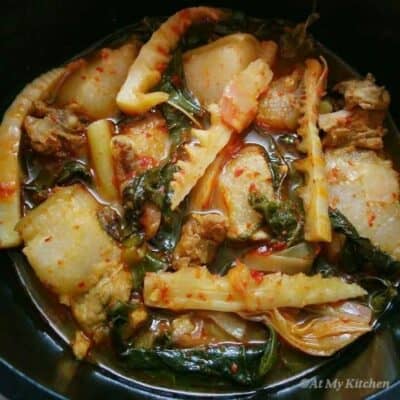
Authentic Naga Pork with Colocasia and Sichuan Greens
Experience the vibrant flavors of Northeast India with this authentic Naga-style pork recipe. Tender pork is slow-cooked with a medley of earthy colocasia leaves, unique Sichuan greens (Mongmong Tu/Mezenga Pata), and tangy fermented bamboo shoots. A touch of fiery Naga King chili (Raja Mircha) adds a delightful kick.This soul-warming dish is a celebration of Naga culinary heritage, offering a comforting and bold flavor profile that’s perfect for lunch or dinner. The combination of textures and tastes creates a truly memorable dining experience.Easy to follow instructions guide you through each step, ensuring a delicious and authentic Naga Pork creation in your own kitchen. Impress your family and friends with this exotic and flavorful masterpiece!
View Recipe
~ 227kcal
Sourcing Quality Pork: What Actually Matters
For first-time pork cooks, sourcing quality makes a bigger difference than technique. Clean cuts, transparent handling, and proper storage remove half the anxiety before you even start cooking.
What to Look for in a Pork Supplier
Transparency indicators:
- Clear cut labeling (shoulder vs. belly vs. chops)
- Visible “packaged on” or “use by” dates
- Information about farming practices
- Cold chain maintenance details
Red flags to avoid:
- Vague descriptions (“pork pieces”)
- No temperature control during display
- Unable to answer questions about cut sources
- Discolored or wet packaging
Why Many Home Cooks Now Prefer Online Sources
The consistency advantage: When you find a reliable source—whether local or online—you know what cut you’re getting, how fresh it is, and how it’s been handled.
Before you start ordering pork meat online, verify:
- Cold chain logistics (insulated packaging, ice packs)
- Customer reviews mentioning freshness upon delivery
- Clear return/refund policies
- Responsive customer service for questions
Local butcher advantages:
- Can request custom cuts
- See meat before purchasing
- Build relationship for better cuts over time
- Usually better prices per kilo
Online platform advantages:
- Wider cut selection
- Consistent quality standards
- Delivery to areas with limited local access
- Detailed nutritional information
Both options work—choose based on your access, convenience, and confidence level.
Common Beginner Mistakes (And How to Avoid Them)
1. Overcooking Pork
Problem: Dry, tough, flavorless meat
Solution: Use a meat thermometer. Pull pork at 145°F/63°C, let rest. Carryover cooking adds 5-10°F.
2. Not Letting Meat Rest
Problem: All the juices run out when you cut into it
Solution: Wait 3 minutes for chops, 10 minutes for roasts. Cover loosely with foil.
3. Cooking Cold Meat
Problem: Uneven cooking, tough exterior
Solution: Let pork sit at room temperature 20-30 minutes before cooking (but not longer for safety).
4. Wrong Cut for the Recipe
Problem: Tough stir-fry or dry curry
Solution: Match cuts to cooking methods—quick-cooking cuts for high heat, tough cuts for slow cooking.
5. Skipping the Marinade
Problem: Surface seasoning only, bland interior
Solution: Marinate at least 30 minutes, preferably 2-4 hours. Overnight for tough cuts.
6. Crowding the Pan
Problem: Meat steams instead of sears, no browning
Solution: Cook in batches with space between pieces. Use a large pan.
Frequently Asked Questions
How long can I store raw pork?
3-5 days in the refrigerator (40°F/4°C), 4-6 months in the freezer (0°F/-18°C).
Can I cook frozen pork directly?
Yes, but add 50% more cooking time and use gentle heat methods. Best practice: thaw first for even cooking.
Why does my pork smell slightly sweet?
This is normal—fresh pork has a mild, slightly sweet aroma. Sour or ammonia smells indicate spoilage.
Is pink pork safe?
Yes, if it reaches 145°F/63°C internal temperature. Color isn’t a reliable indicator—temperature is.
Which cut is most budget-friendly?
Pork shoulder and minced pork offer the best value. Shoulder becomes incredibly tender when slow-cooked.
Can I use pork in traditional chicken recipes?
Often yes, but adjust cooking times. Pork typically needs slightly longer cooking or lower temperatures than chicken.
Final Thoughts: Your First Pork Dish Doesn’t Need to Be Perfect
The goal isn’t mastery on day one—it’s building confidence through experience.
Start with a simple recipe like ginger-garlic pork chops or keema. Use a meat thermometer. Buy from a source you trust, whether that’s a local butcher or an online platform with good reviews.
Most importantly, release the anxiety. Pork isn’t more dangerous or difficult than other meats you already cook. It just requires the same basic hygiene and attention you’d give to chicken.
Once you cook your first successful pork dish at home, you’ll wonder why you waited so long.
Also Read: Comprehensive Guide to Cooking with Pork Belly
About This Guide: This article provides evidence-based cooking guidance based on USDA food safety standards and culinary techniques used in Indian regional cuisines. Always follow current food safety recommendations from your local health authorities.
Related Posts You May Like